Category Archives: inflammation

Omega-3 fatty acids, Pain and Arthritis

Before modern pharmacy an early treatment for Rheumatoid Arthritis (RA) was cod liver oil, rich in omega-3 fats and vitamin D. A 2013 study demonstrated that consumption of cod liver oil resulted in a reduction of daily diclofenac in Rheumatoid Arthritis. As early as 1959 cod liver oil was recommended for arthritis in the medical literature. A 2017 review of marine omega-3 fats for arthritis pain found moderate quality evidence in rheumatoid arthritis patients. A 2024 review of prevention and treatment for RA suggested that a diet rich in fiber, vitamins, omega 3 and low glycemic index foods contributes to protection from RA. A comprehensive review of omega-3 fatty acids for RA included analysis of several studies and concluded that omega-3 was a valuable therapeutic option to improve pain symptoms, tender joint count, duration of morning stiffness and the frequency of NSAID consumption. A 2019 review of cumulative data on omega-3 fats to combat autoimmune diseases concluded:

“The promising findings coming from the cumulative research work over the last decade solidified the role of ω-3 PUFAs as a potential candidate to prevent or even treat such autoimmune diseases as type 1 diabetes, RA, SLE, MS”

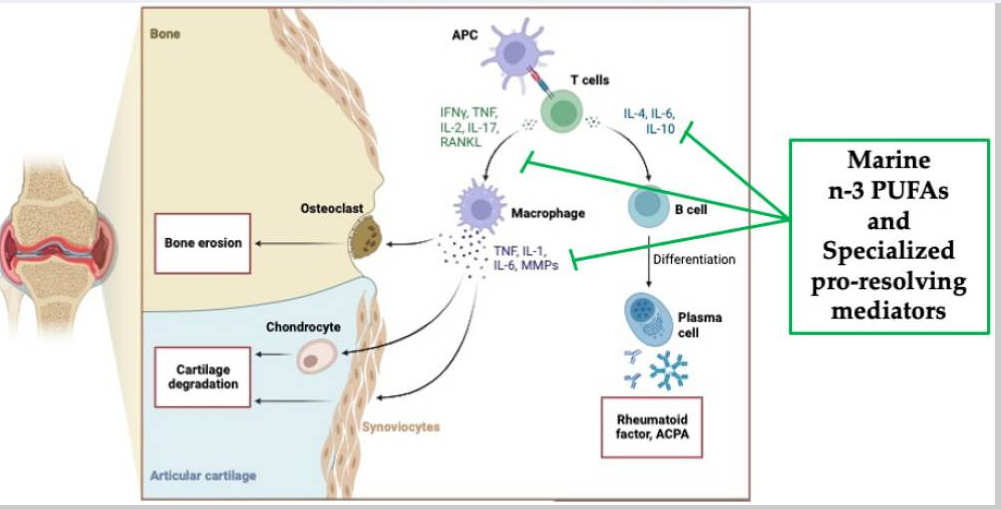
A 2024 review of marine omega-3 PUFA (polyunsaturated fatty acids) for RA reported:

“Altogether the data reported in this review show that anti-inflammatory interventions, i.e., high fish consumption or supplements containing n-3 PUFAs, should be the standard of care, along with pharmacotherapy, in treating patients with RA.”

And here is a graphic from that article showing the effect of SPMs (specialized pro-resolving mediators, derived from omega-3s):

What about osteoarthritis?

A multicenter randomized double blind placebo controlled trial of krill oil containing 0.60 g EPA/d, 0.28 g DHA/d, 0.45 g astaxanthin/d demonstrated improvements in pain, stiffness and physical function.

Some omega-3 supplement studies have demonstrated no significant pain relief in osteoarthritis. Those studies did not reduce the consumption of pro-inflammatory n-6 fatty acids which compete with omega-3 fats for the enzymes which can lead to pro or anti-inflammatory mediators. They also did not measure the omega 6/omega 3 ratio in blood or tissues. Nor did they measure the omega-3 index (% of omega-3 achieved in red blood cell membranes, the gold standard for evaluating tissue levels achieved) This 2018 analysis stated:

“High Omega-3 (n-3) polyunsaturated fatty acids (PUFAs) are associated with lower levels of inflammatory mediators, anti-nociception, and adaptive cognitive/emotional functioning. High Omega-6 (n-6) PUFAs are associated with inflammation, nociception, and psychological distress. While findings related to n-3 supplementation in knee OA are mixed, consideration of the n-6:n-3 ratio and additional outcome measures may provide improved understanding of the potential relevance of these fatty acids in OA”

The authors went on to access blood n-6/n-3 ratios in patients with OA and found the following:

“The high ratio group reported greater pain and functional limitations, (all p’s<0.04), mechanical temporal summation (hand and knee, p<0.05), and perceived stress (p=0.008) but not depressive symptoms.”

“In adults with knee pain, a high n-6:n-3 ratio is associated with greater clinical pain/functional limitations, experimental pain sensitivity, and psychosocial distress compared to a low ratio group.”

The anti-inflammatory diet that I follow and recommend eliminates the major sources of excess omega-6 in the diet, specifically the “vegetable oils” which are actually seed, grain, and legume oils predominated by soy oil, corn oil, peanut and cottonseed oil present in cooking “vegetable oils” and processed foods. A table that displays the ratio of omega 3 to omega 6 in various oils can be found here. Note that this table does not reveal the amounts of MUFA (mono unsaturated fatty acids) which are arguably “heart healthy”. Nor does it address the important issue of protective polyphenols and anti-oxidants (such as in Extra Virgin Olive oil aka EVOO). So do not make choices of oil based only on the omega-3/6 ratio.

Another consideration in choosing oils for cooking (as opposed to salad dressing) is the smoke point. Under high heat, oils are subject to oxidation which creates a proinflammatory effect when consumed. Refined Avocado oil has the highest smoke point (520 degrees F). But we digress. Back to pain and arthritis.

An article just published in Nutrients reviewed Omega-3 Supplementation and Its Effects on Osteoarthritis.

“omega-3 polyunsaturated fatty acids (PUFA) have demonstrated an influential role in the progression of OA, resulting in the reduction of cartilage destruction, inhibition of pro-inflammatory cytokine cascades, and production of oxylipins that promote anti-inflammatory pathways.” 

“Research has demonstrated a positive effect on the modulation of OA symptoms through diet and exercise to promote an anti-inflammatory environment. More specifically, omega-3 PUFAs have demonstrated a reduction in inflammatory biomarkers and cartilage degradation, counteracting the natural disease state of OA. In addition to their chondroprotective role, omega-3 supplementation has been shown to have indirect positive effects on muscle tissue recovery following exercise, which is necessary to prevent the progression of OA and maintain an independent, healthy lifestyle. The effects of omega-3 supplementation on the disease state of OA and its symptoms remain inconclusive. Further clinical trials utilizing human participants are warranted to provide a conclusive recommendation on standardized supplementation of omega-3 for the modulation of osteoarthritis.”

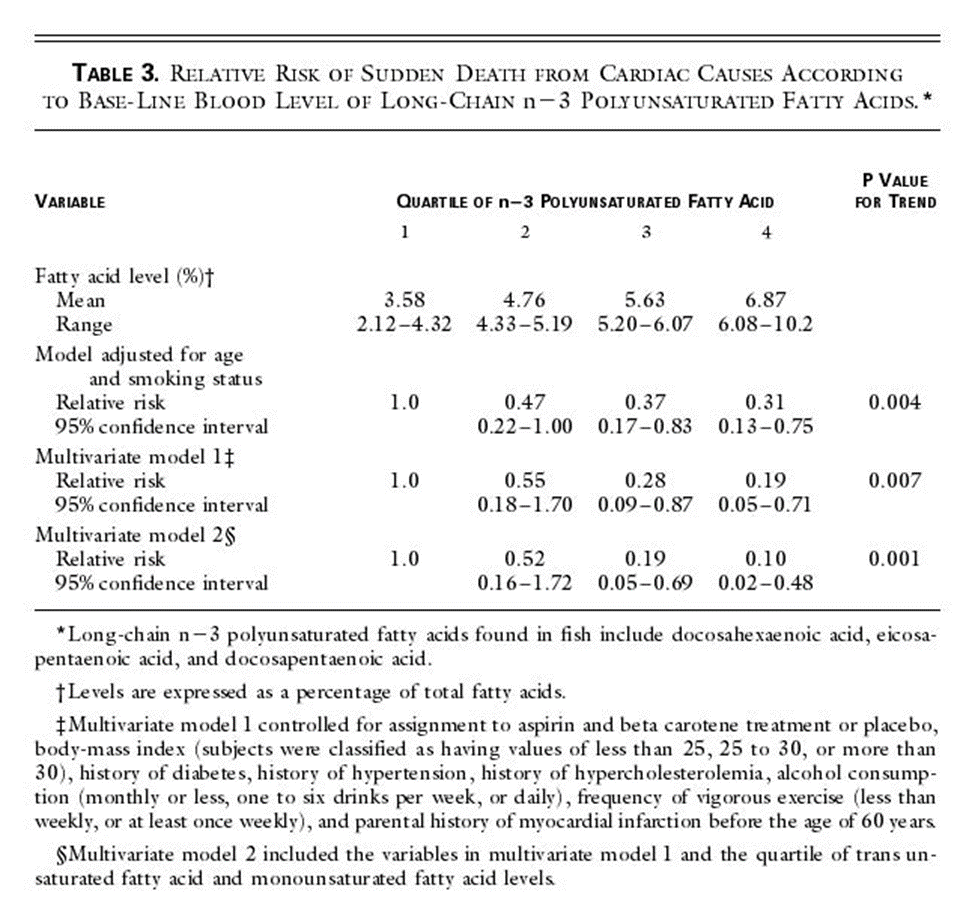
Given the cardioprotective effects, discussed in my last post (including an 80% reduction in sudden death at the highest quintile of omega-3 index) and other benefits (reduction in all cause mortality with high tissue levels), there are many reasons to include large amounts of low mercury fatty fish (wild Alaskan salmon, sardines, herring, trout) in the diet and to consider supplementation when your omega 3 index is < 8%. Likewise, in the presence of arthritis and pain, getting tissue levels of omega 3 up and reducing excessive pro-inflammatory omega 6 will likely provide significant benefit.

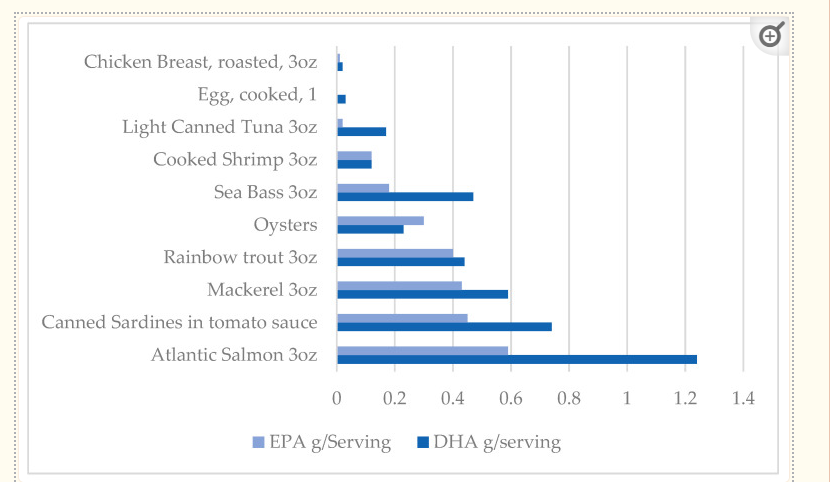
Here is a graphic with the omega 3 content of some foods.

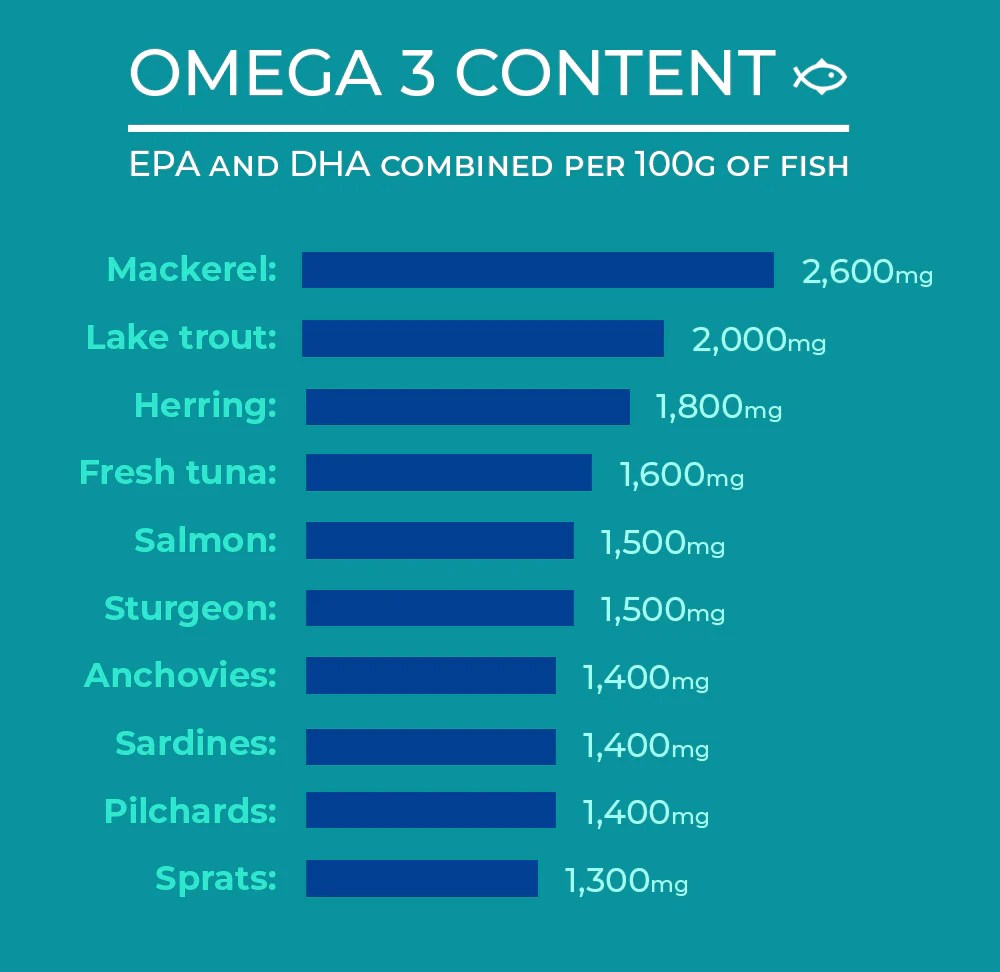
And another:

As mentioned in my previous post about omega-3 and cardiovascular health, 1800 mg of omega-3 FA daily is adequate in most people to achieve and omega-3 index of 8%, the level at which cardiovascular protection is greatest.

THIS WEBSITE PROVIDES INFORMATION FOR EDUCATIONAL PURPOSES ONLY. CONSULT YOUR HEALTH CARE PROVIDER FOR MEDICAL ADVICE.

Eat clean, drink filtered water, love, laugh, exercise outdoors in a greenspace, get some morning sunlight, block the blue light before bed, engage in meaningful work, find a sense of purpose, spend time with those you love, AND sleep well tonight.

Doctor Bob
Omega-3 in your diet and supplements

The benefit of omega-3 supplementation has been debated in the cardiology and nutritional literature for many years. Most studies of supplementation have failed to measure tissue levels achieved and often used very low doses. But when tissue levels were measured, either in the serum or red blood cell membrane, the studies consistently demonstrated significant reductions in all-cause mortality and cardiovascular mortality associated with high levels of omega-3 fatty acids.

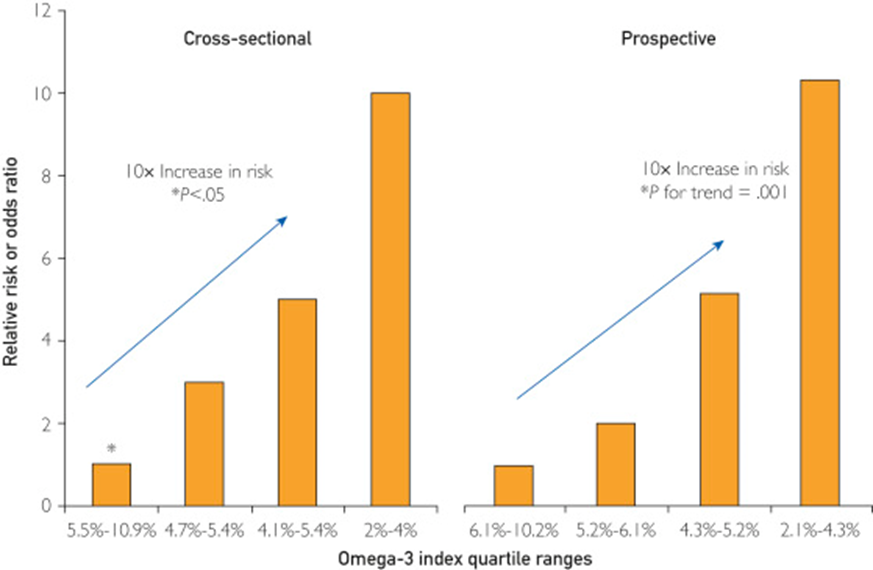
In addition, higher levels of omega 3 are associated with >=80% reduction in sudden death associated with acute myocardial infarction (acute MI) and > 80% reduction in sudden death in cohorts without known coronary artery disease followed long term.

Two Coronary CT Angiogram (CCTA) studies demonstrated that patients with stable coronary artery disease on statin therapy randomized to high dose EPA and DHA had “prevention of coronary plaque progression when an omega-3 fatty acid index >= 4% was achieved.”

 Another CCTA study demonstrated that patients receiving omega 3 supplementation had significantly less coronary atherosclerotic “high risk” lipid rich plaque prevalence (3.8% versus 32%) and lower total non-calcified plaque burden independent of cardiovascular risk factors compared to matched controls not receiving omega 3 supplements.

Omega 3 supplementation after an acute myocardial infarction has been found to reduce infarct size, reduce scaring (fibrosis), and enhance heart tissue healing. (Randomized controlled clinical trial) However a post MI study in 1027 elderly patients randomized to receive 1.8 grams per day of EPA+DHA versus a control group receiving corn oil showed no reduction in the primary composite cardiovascular endpoint between the two groups at 2 years but a higher incidence of AF in the omega 3 group that did not reach statistical significance.

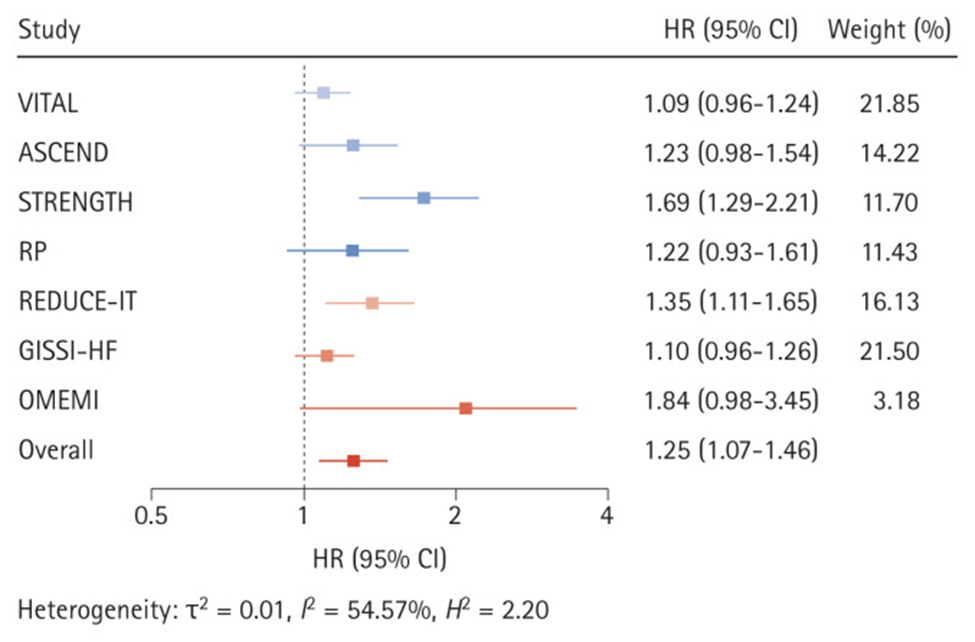
Recently a study, widely reported by the lay press, suggested that high dose omega-3 supplementation was associated with increased risk of atrial fibrillation (AF). These results conflicted with previous studies which demonstrated just the opposite, specifically prior studies demonstrated reduced risk of AF. The more recent study suffered a significant design flaw. The study in question failed to make statistical adjustment for the increased life span associated with higher levels of omega-3. Since age is a primary risk factor for AF, any intervention which increases life span would be expected to result in more AF over the lifetime of the patients as they aged (i.e., more elder years results in increased risk of AF). Therefore, statistical adjustment for that effect should be employed, but was not done in the study.

Unfortunately, science journalism has deteriorated to a state where the conclusions of study authors are most often quoted without interpretation or context, and without critical analysis or comparisons with previous studies that may have demonstrated opposing results.

In addition to large well-designed studies that have suggested a reduced risk of AF associated with omega-3 fatty acids, there have been natural experiments that provide reassuring information. The indigenous Inuit people of Greenland, for example, historically consumed large amounts of omega-3 in their diet with no evidence of increased risk of AF. In fact, before the introduction of western processed foods, estimates of AF among the Inuit were 0.6% (1963) compared to a “worldwide prevalence of AF in adults between 2 and 4%, between one and two percent in Canadian and the general US population and between 0.5% and 3% in most low- and middle-income countries.” A more recent study of Greenland yielded a prevalence of 1.4% likely reflecting a change in habits consisting of less exercise, more tobacco use and a shift to a more Western diet.

Still, multiple studies that used high dose omega 3 supplements in patients with known cardiac disease suggest an increased risk of AF. A good review of omega-3 fatty acids and atrial fibrillation was published in the Korean Journal of Internal Medicine, referenced below.

My interpretation of the complex data in this area is as follows.

At supplemental doses of EPA+DHA above 1.8 grams per day (and perhaps above 1 gram per day) in patients with known coronary artery disease (CAD), at high risk of CAD, or following a myocardial infarction, the risk of AF is increased by about 25% (relative risk). But the risk of lethal ventricular arrythmias (sudden death) associated with myocardial infarction (heart attack) is 80% lower in patients with a red blood cell omega 3 index of >=8. In people without known CAD, an omega-3 index >=8% is associated with an 80% reduction in sudden cardiac death. CCTA studies show significantly lower unstable “vulnerable” plaque in patients on omega-3 supplements. Similarly, omega 3 supplementation in patients on statins associates with halted plaque progression determined by serial CCTA in non-diabetics.

In addition, higher tissue levels of omega 3 are associated with significantly reduced all-cause, cardiovascular, and cancer mortality.

Omega-3 fatty acids are the chemical precursors of SPMs, specialized pro-resolving lipid mediators which help resolve inflammation. We know that cardiovascular events are driven by chronic inflammation in the walls of arteries, often mediated by insulin resistance. Chronic inflammation contributes to atherosclerosis (production of plaque in the artery wall) as well as cardiovascular events that result when unstable plaque ruptures.  Studies suggest that n-3 fatty acids may have antiarrhythmic properties with membrane-stabilizing effects in addition to antithrombotic and anti-inflammatory properties on the endothelial level. Basic science, observational studies and clinical trials have demonstrated that higher tissue levels of omega 3 fatty acids are associated with longer health span and lifespan. This understanding must be balanced with a probable increased risk of AF in certain clinical situations associated with high dose omega-3 supplements as described above (people with known CAD, high risk for CAD, or following and MI). Note that current AHA and ACC dietary guidelines include at least 2 servings of fatty fish per week, one serving provides approximately 1800 mg of omega-3.

Getting omega-3 fatty acids from cold water fatty fish would be ideal. Unfortunately, many individuals do not like salmon, sardines, mackerel or herring and simply will not consume enough of this fish to achieve protective tissue levels. Other species of fish and seafood provide much less amounts of omega 3. Another consideration is that individuals process omega 3 fats differently so different amounts of omega 3 will be necessary to reach the same protective levels in tissue. You can obtain a red blood cell omega-3 index using a home kit and a finger prick without a prescription (https://omegaquant.com/). The sample is mailed in to the lab and results reported directly to you. I have no financial relationship with these folks.

Bill Harris, PhD, is widely published in the area of omega-3 science. He developed the first clinically useful tissue assay which measures the % of omega 3 fat in red blood cell membranes, the “omega-3 index” which is the gold standard for omega 3 research and clinical testing. Although serum levels correlate with the red blood cell index, the later reveals dietary consequences of a 2-3 month period while serum levels reflect just a few days of most recent dietary habits. The red blood cell omega 3 index is analogous to the hemoglobin A1c which reveals average blood sugars over a 2–3-month period. Bill Harris suggests that 1800 mg per day of omega 3 fat consumption (food plus supplements) will achieve an index of >= 8% in most individuals.

Here are some references.

Harris WS, Tintle NL et.al., Fatty Acids and Outcomes Research Consortium (FORCE). Blood n-3 fatty acid levels and total and cause-specific mortality from 17 prospective studies. Nat Communications. 2021 Apr 22;12(1):2329. doi: 10.1038/s41467-021-22370-2. PMID: 33888689; PMCID: PMC8062567. https://pubmed.ncbi.nlm.nih.gov/33888689/

“Here we report the results of a de novo pooled analysis conducted with data from 17 prospective cohort studies examining the associations between blood omega-3 fatty acid levels and risk for all-cause mortality. Over a median of 16 years of follow-up, 15,720 deaths occurred among 42,466 individuals. We found that, after multivariable adjustment for relevant risk factors, risk for death from all causes was significantly lower (by 15-18%, at least p < 0.003) in the highest vs the lowest quintile for circulating long chain (20-22 carbon) omega-3 fatty acids (eicosapentaenoic, docosapentaenoic, and docosahexaenoic acids). Similar relationships were seen for death from cardiovascular disease, cancer and other causes”

Blood Levels of Long-Chain n–3 Fatty Acids and the Risk of Sudden Death Authors: Christine M. Albert, M.D., M.P.H., Hannia Campos, Ph.D., Meir J. Stampfer, M.D., Dr.P.H., Paul M. Ridker, M.D., M.P.H., JoAnn E. Manson, M.D., Dr.P.H., Walter C. Willett, M.D., Dr.P.H., and Jing Ma, M.D., Ph.D.

Published April 11, 2002 N Engl J Med 2002;346:1113-1118DOI:10.1056/NEJMoa012918 VOL. 346 NO. 15 https://www.nejm.org/doi/full/10.1056/NEJMoa012918

We conducted a prospective, nested case–control analysis among apparently healthy men who were followed for up to 17 years in the Physicians’ Health Study. The fatty-acid composition of previously collected blood was analyzed by gas–liquid chromatography for 94 men in whom sudden death occurred as the first manifestation of cardiovascular disease and for 184 controls matched with them for age and smoking status.

RESULTS

Base-line blood levels of long-chain n–3 fatty acids were inversely related to the risk of sudden death both before adjustment for potential confounders (P for trend = 0.004) and after such adjustment (P for trend = 0.007). As compared with men whose blood levels of long-chain n–3 fatty acids were in the lowest quartile, the relative risk of sudden death was significantly lower among men with levels in the third quartile (adjusted relative risk, 0.28; 95 percent confidence interval, 0.09 to 0.87) and the fourth quartile (adjusted relative risk, 0.19; 95 percent confidence interval, 0.05 to 0.71).

CONCLUSIONS

The n–3 fatty acids found in fish are strongly associated with a reduced risk of sudden death among men without evidence of prior cardiovascular disease.

Heydari B, Abdullah S, Pottala JV, Shah R, Abbasi S, Mandry D, Francis SA, Lumish H, Ghoshhajra BB, Hoffmann U, Appelbaum E, Feng JH, Blankstein R, Steigner M, McConnell JP, Harris W, Antman EM, Jerosch-Herold M, Kwong RY. Effect of Omega-3 Acid Ethyl Esters on Left Ventricular Remodeling After Acute Myocardial Infarction: The OMEGA-REMODEL Randomized Clinical Trial. Circulation. 2016 Aug 2;134(5):378-91. doi: 10.1161/CIRCULATIONAHA.115.019949. PMID: 27482002; PMCID: PMC4973577. https://www.ahajournals.org/doi/10.1161/CIRCULATIONAHA.115.019949

Conclusions: Treatment of patients with acute myocardial infarction with high-dose omega-3 fatty acids was associated with reduction of adverse left ventricular remodeling, noninfarct myocardial fibrosis, and serum biomarkers of systemic inflammation beyond current guideline-based standard of care.

Effect of Different Antilipidemic Agents and Diets on Mortality A Systematic Review

Studer M, Briel M, Leimenstoll B, Glass TR, Bucher HC. Effect of Different Antilipidemic Agents and Diets on Mortality: A Systematic Review. Arch Intern Med. 2005;165(7):725–730. doi:10.1001/archinte.165.7.725

Compared with control groups, risk ratios for cardiac mortality indicated benefit from statins (0.78; 95% CI, 0.72-0.84), resins (0.70; 95% CI, 0.50-0.99) and n-3 fatty acids (0.68; 95% CI, 0.52-0.90).

Feuchtner G, Langer C, Barbieri F, Beyer C, Dichtl W, Friedrich G, Schgoer W, Widmann G, Plank F. The effect of omega-3 fatty acids on coronary atherosclerosis quantified by coronary computed tomography angiography. Clin Nutr. 2021 Mar;40(3):1123-1129. doi: 10.1016/j.clnu.2020.07.016. Epub 2020 Jul 22. PMID: 32778459. https://pubmed.ncbi.nlm.nih.gov/32778459/

Conclusions: Omega-3-PUFA supplementation is associated with less coronary atherosclerotic “high-risk” plaque (lipid-rich) and lower total non-calcified plaque burden independent on cardiovascular risk factors. Our study supports direct anti-atherogenic effects of Omega-3-PUFA.

Alfaddagh A, Elajami TK, Saleh M, Mohebali D, Bistrian BR, Welty FK. An omega-3 fatty acid plasma index ≥4% prevents progression of coronary artery plaque in patients with coronary artery disease on statin treatment. Atherosclerosis. 2019 Jun;285:153-162. doi: 10.1016/j.atherosclerosis.2019.04.213. Epub 2019 Apr 13. PMID: 31055222; PMCID: PMC7963401.An omega-3 fatty acid plasma index ≥4% prevents progression of coronary artery plaque in patients with coronary artery disease on statin treatment – PMC (nih.gov)

Conclusions: EPA and DHA added to statins prevented coronary plaque progression in nondiabetic subjects with mean LDL-C <80 mg/dL, when an omega-3 index ≥4% was achieved. Low omega-3 index <3.43% identified nondiabetic subjects at risk of coronary plaque progression despite statin therapy

Association of Plasma Phospholipid Long-Chain Omega-3 FattyAcids with Incident Atrial Fibrillation in Older Adults: The Cardiovascular Health Study, Circulation Volume 125, Number 9 https://doi.org/10.1161/CIRCULATIONAHA.111.062653

Among 3326 US men and women ≥65 years of age and free of AF or heart failure at baseline, plasma phospholipid levels of eicosapentaenoic acid, docosapentaenoic acid, and docosahexaenoic acid were measured at baseline by use of standardized methods. Incident AF (789 cases) was identified prospectively from hospital discharge records and study visit ECGs during 31 169 person-years of follow-up (1992-2006).

Conclusions: In older adults, higher circulating total long-chain n-3 PUFA and docosahexaenoic acid levels were associated with lower risk of incident AF (atrial fibrillation). These results highlight the need to evaluate whether increased dietary intake of these fatty acids could be effective for the primary prevention of AF.

Omega-3 Fatty Acid Therapy: The Tide Turns for a Fish Story https://www.mayoclinicproceedings.org/article/S0025-6196(16)30764-9/fulltext

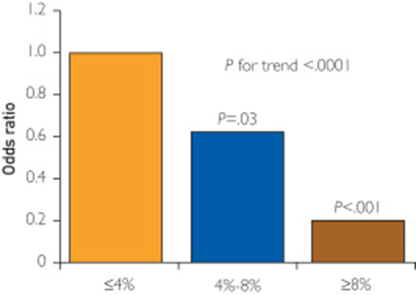
An omega-3 index of less than 4% is associated with increased CHD risk, particularly for sudden cardiac death. In contrast, an omega-3 index of more than 8% is associated with low CHD risk, whereas the range between 4% and 8% is considered intermediate risk

Risk of sudden death

Alfaddagh A, Elajami TK, Ashfaque H, Saleh M, Bistrian BR, Welty FK. Effect of Eicosapentaenoic and Docosahexaenoic Acids Added to Statin Therapy on Coronary Artery Plaque in Patients with Coronary Artery Disease: A Randomized Clinical Trial. J Am Heart Assoc. 2017; 6: e006981. 10.1161/JAHA.117.006981. https://pubmed.ncbi.nlm.nih.gov/29246960/

“High-dose eicosapentaenoic acid and docosahexaenoic acid provided additional benefit to statins in preventing progression of fibrous coronary plaque in subjects adherent to therapy with well-controlled low-density lipoprotein cholesterol levels.”

Huh JH, Jo SH. Omega-3 fatty acids and atrial fibrillation. Korean J Intern Med. 2023 May;38(3):282-289. doi: 10.3904/kjim.2022.266. Epub 2022 Dec 14. PMID: 36514212; PMCID: PMC10175873 https://pubmed.ncbi.nlm.nih.gov/36514212/

.

Effects of omega-3 fatty acid supplementation on the risk of atrial fibrillation. HR, hazard ratio; CI, confidence interval; VITAL, Vitamin D and Omega-3 Trial; ASCEND, A Study of Cardiovascular Events in Diabetes; STRENGTH, Statin Residual Risk with Epanova in High Cardiovascular Risk Patients with Hypertriglyceridemia; RP, Risk and Prevention Study; REDUCE-IT, Reduction of Cardiovascular Events With Icosapent Ethyl-Intervention Trial; GISSI-HF, Gruppo Italiano per lo Studio della Sopravvivenza nell’Insufficienza Cardiaca-Heart Failure; OMEMI, Omega-3 Fatty Acids in Elderly With Myocardial Infarction. Effects of omega-3 fatty acid supplementation on the risk of atrial fibrillation. HR, hazard ratio; CI, confidence interval; VITAL, Vitamin D and Omega-3 Trial; ASCEND, A Study of Cardiovascular Events in Diabetes; STRENGTH, Statin Residual Risk with Epanova in High Cardiovascular Risk Patients with Hypertriglyceridemia; RP, Risk and Prevention Study; REDUCE-IT, Reduction of Cardiovascular Events With Icosapent Ethyl-Intervention Trial; GISSI-HF, Gruppo Italiano per lo Studio della Sopravvivenza nell’Insufficienza Cardiaca-Heart Failure; OMEMI, Omega-3 Fatty Acids in Elderly With Myocardial Infarction. Effects of omega-3 fatty acid supplementation on the risk of atrial fibrillation. HR, hazard ratio; CI, confidence interval; VITAL, Vitamin D and Omega-3 Trial; ASCEND, A Study of Cardiovascular Events in Diabetes; STRENGTH, Statin Residual Risk with Epanova in High Cardiovascular Risk Patients with Hypertriglyceridemia; RP, Risk and Prevention Study; REDUCE-IT, Reduction of Cardiovascular Events With Icosapent Ethyl-Intervention Trial; GISSI-HF, Gruppo Italiano per lo Studio della Sopravvivenza nell’Insufficienza Cardiaca-Heart Failure; OMEMI, Omega-3 Fatty Acids in Elderly With Myocardial Infarction

THIS WEBSITE PROVIDES INFORMATION FOR EDUCATIONAL PURPOSES ONLY. CONSULT YOUR HEALTH CARE PROVIDER FOR MEDICAL ADVICE.

Eat clean, drink filtered water, love, laugh, exercise outdoors in a greenspace, get some morning sunlight, block the blue light before bed, engage in meaningful work, find a sense of purpose, spend time with those you love, AND sleep well tonight.

Doctor Bob
4th International Evolutionary Health Conference

Sorry for the confusion. The website for the International Evolutionary Health Conference changed when the venue changed from Boston to Virtual. Here is the correct website link which gives a list of speakers/topics and sign up information. 

https://2023.evolutionaryhealthconference.com/

The previously published link will lead you to a site that says “canceled”. The conference is not cancelled, the venue has changed to virtual. 

Dr. Bob

/

Fourth International Evolutionary Health Conference

I’ve been asked to talk at the fourth International Evolutionary Health Conference on the topic of Cardiovascular Risk Assessment. This year the conference is virtual. Presenters include clinicians and researchers discussing many topics related to health. The underlying principle of this approach attributes modern degenerative and chronic diseases to mismatch between our evolutionary biology and present day life. You can sign up for this virtual event here.

https://2023.evolutionaryhealthconference.com/

Agenda

9:45 AM – 10:00 AM

Opening remarks

Prof. Lynda Frassetto

10:00 AM – 10:30 AM

Maladaptive cognitive/emotional processing as the cause of the stress response

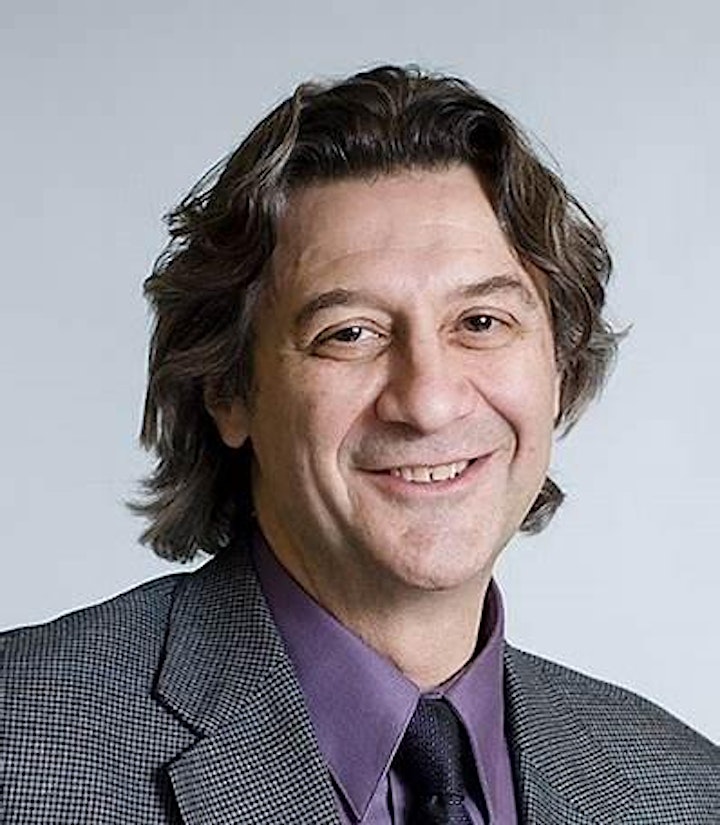
Prof. Igor Mitrovic


Physiologic reserve is spare capacity activated when demand exceeds baseline, causing stress. If demand surpasses reserve, it damages the system and leads to death. The brain predicts the future to a…
View More

10:30 AM – 11:00 AM

How breathing patterns affect health

Dr. Michael Mew

11:00 AM – 11:15 AM

Round table with Q & A (Moderator: Darryl Edwards)

Dr. Michael Mew

Prof. Igor Mitrovic

11:15 AM – 11:45 AM

Break and Poster session


If you would like to submit a poster, please contact us at evolution.conference@nutriscience.pt

11:45 AM – 12:15 PM

Decoding The Truth: Cancer, Carbs and Cure

Darryl Edwards, MSc


1. We will delve into the extensive evidence showcasing how higher levels of physical activity can reduce the risk of various cancers. 2. While awareness of the importance of exercise exists, we will…
View More

12:15 PM – 12:45 PM

Influential factors on sun-induced vitamin D synthesis

Pedro Bastos, PhD candidate


Ultraviolet B radiation is absorbed in the epidermis by 7-dehydrocholesterol, giving rise to previtamin D3 and subsequently to vitamin D3. In the liver, vitamin D is converted to one of the various c…
View More

12:45 PM – 1:00 PM

Round table with Q & A (Moderator: Prof. Lynda Frassetto)

Darryl Edwards, MSc

Pedro Bastos, PhD candidate

1:00 PM – 2:15 PM

Lunch Break

2:15 PM – 2:45 PM

How nutrition can impact microbiome composition/permeability/immune response

Prof. Alessio Fasano


Improved hygiene and reduced microorganism exposure are linked to the ‘epidemic’ of chronic inflammatory diseases (CID) in developed nations. This hygiene hypothesis suggests that lifestyle and envir…
View More

2:45 PM – 3:15 PM

Comprehensive cardiovascular risk assessment

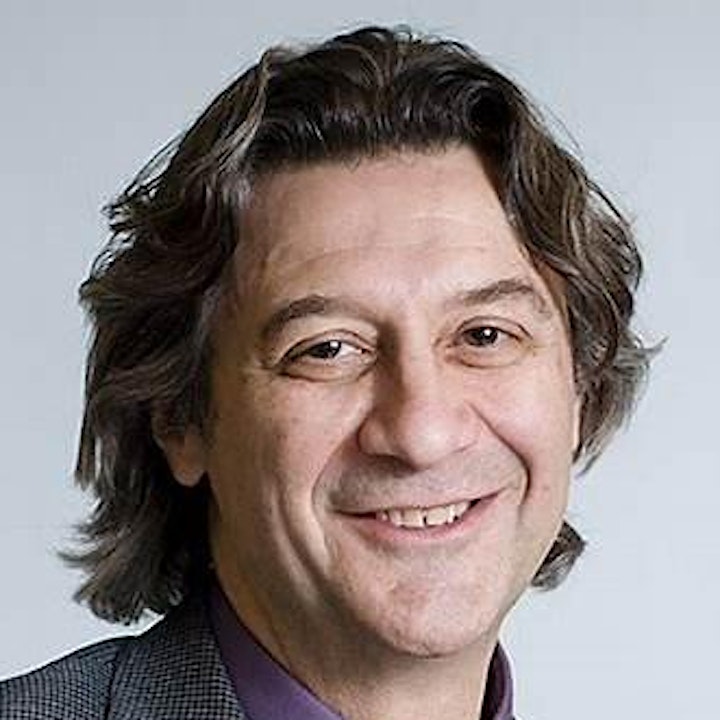
Dr. Robert Hansen


Assessing insulin resistance is central to predicting CV risk. LDL-C and standard lipid profile is extremely limited in predictive value. A systems engineering understanding of atherosclerosis and ev…
View More

3:15 PM – 3:30 PM

Round table with Q & A (Moderator: Pedro Bastos)

Prof. Alessio Fasano

Dr. Robert Hansen

3:30 PM – 3:45 PM

Short Break

3:45 PM – 4:15 PM

Environmental influences on cellular senescence and aging

Prof. Peter Stenvinkel


Planetary health recognizes that human well-being depends on the health of ecosystems. Neglecting this concept has led to an anthropocentric world, causing increased greenhouse gas emissions, heat st…
View More

4:15 PM – 4:45 PM

Fueling a Bright Future: The Role of Diet in Preventing Childhood Obesity

Dr. Polina Sayess


Childhood obesity is a global health issue. In my presentation, I’ll explore its origins, classifications, and mitigation strategies. I’ll discuss the definitions and distinctions between “overweight…
View More

4:45 PM – 5:00 PM

Round table with Q & A (Moderator: Prof. Lynda Frassetto)

Prof. Peter Stenvinkel

Dr. Polina Sayess

5:00 PM – 5:30 PM

Final discussion with all speakers and moderators


Establishing future research and intervention directions.

5:30 PM – 5:45 PM

Closing remarks

Prof. Lynda Frassetto

Please join us if you can.

Dr. Bob

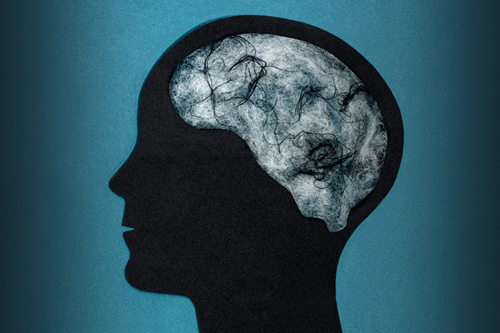
Long Haulers, Brain Fog and Post Exertional Malaise

An excellent article recently published in the Atlantic was so well written that I have cut and pasted important snippets to help create this post. The review confirms many findings uncovered in my reading of several scientific publications.

You can read the full article here:

The crushing fog of long COVID

20 to 30 percent of patients report brain fog three months after their initial infection, as do 65 to 85 percent of the long-haulers who stay sick for much longer.

Of long COVID’s many possible symptoms, brain fog “is by far one of the most disabling and destructive,”

It is more profound than the clouded thinking that accompanies hangovers, stress, or fatigue.

It is not a mood disorder.

It is almost always a disorder of “executive function”—the set of mental abilities that includes:

  1. focusing attention,
  2. holding information in mind, and
  3. blocking out distractions.

Patients state they often lose focus mid-sentence.

Difficulty with simple tasks impairs activities of daily living.

“I couldn’t unload a dishwasher, because identifying an object, remembering where it should go, and putting it there was too complicated.”

The memories are there, but with impaired executive function, the brain neither chooses the important things to store nor retrieves that information efficiently.

Most people with brain fog are not so severely affected, and gradually improve with time. But even when people recover enough to work, they can struggle with minds that are less nimble than before.

“I’ve had surgeons who can’t go back to surgery, because they need their executive function,” Monica Verduzco-Gutierrez, a rehabilitation specialist at UT Health San Antonio.

That specific constellation of problems also befalls many people living with HIV, epileptics after seizures, cancer patients experiencing so-called chemo brain, and people with several complex chronic illnesses such as fibromyalgia.

It’s part of the diagnostic criteria for myalgic encephalomyelitis, also known as chronic fatigue syndrome, or ME/CFS

People with brain fog also excel at hiding it: to protect their jobs when still able to work, or to protect their reputation, or out of embarrassment.

“I know my value in many people’s eyes will be diminished by knowing that I have these cognitive challenges.”

Individuals with previously above average cognitive ability often test “normal” but suffer significant loss compared to their prior ability.

A team of British researchers analyzed data from the UK Biobank study. The findings revealed structural changes in the brain with loss of tissue on MRI scans that correlates with symptoms.

They found that even mild infections can slightly shrink the brain and reduce the thickness of its neuron-rich gray matter. At their worst, these changes were comparable to a decade of aging.

They were especially pronounced in areas such as the parahippocampal gyrus, which is important for encoding and retrieving memories, and the orbitofrontal cortex, which is important for executive function.

In most cases the virus probably harms the brain without directly infecting it.

Inflammatory chemicals can travel from the lungs to the brain, where they disrupt cells called microglia (immune cells in the brain).

In their presence, the hippocampusa region crucial for memoryproduces fewer fresh neurons, while many existing neurons lose their insulating coats (demyelination), so electric signals now course along these cells more slowly.

These are the same changes seen in cancer patients with “chemo fog”.

Neuro-inflammation is “probably the most common way” that COVID results in brain fog, but that there are likely many such routes, such as reactivation of dormant viruses such as Epstein-Barr virus, which has been linked to conditions including ME/CFS and multiple sclerosis.

By damaging blood vessels and filling them with small clots, COVID also throttles the brain’s blood supply, depriving this most energetically demanding of organs of oxygen and fuel.

These problems can be exacerbated or mitigated by factors such as sleep and rest, which explains why many people with brain fog have good days and bad days.

Although other respiratory viruses can wreak inflammatory havoc on the brain, SARS-CoV-2 does so more potently than influenza.

For adults following SARS CoV-2 infection:

risks of cognitive deficit (known as brain fog), dementia, psychotic disorders, and epilepsy or seizures were still increased at the end of the 2-year follow-up period.

For children following SARS CoV-2 infection:

in the 6 months after SARS-CoV-2 infection, children were not at an increased risk of mood (HR 1·02 [95% CI 0·94–1·10) or anxiety (1·00 [0·94–1·06]) disorders, but did have an increased risk of cognitive deficit, insomnia, intracranial haemorrhage, ischaemic stroke, nerve, nerve root, and plexus disorders, psychotic disorders, and epilepsy or seizures (HRs ranging from 1·20 [1·09–1·33] to 2·16 [1·46–3·19])….  Unlike adults, cognitive deficit in children had a finite risk horizon (75 days) and a finite time to equal incidence (491 days).

The fact that neurological and psychiatric outcomes were similar during the delta and omicron waves indicates that the burden on the health-care system might continue even with variants that are less severe in other respects.

There are no proven drug treatments for long-haulers.

But there is hope.

Cancer researchers have developed drugs that can calm inflamed microglia in mice and restore their cognitive abilities;

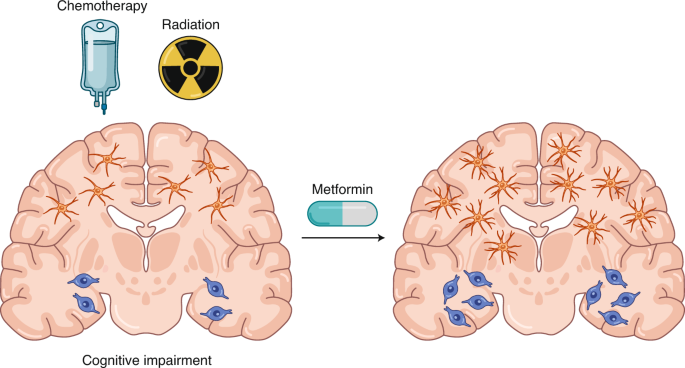
“Metformin can promote the regeneration of neural precursor cell populations and improve cognitive function in a preclinical model of cranial radiation and a pilot clinical study of children after cranial radiation and chemotherapy.”

Treating cancer therapy–related cognitive impairment | Nature Medicine

With regard to long-haulers, better sleep, healthy eating, and other generic lifestyle changes can make the condition more tolerable. Breathing and relaxation techniques can help people through bad flare-ups; speech therapy can help those with problems finding words.

“Some people spontaneously recover back to baseline,”

The largest group of long-haulers—those whose brain fog has improved but not vanished, can “maintain a relatively normal life, but only after making serious accommodations,”

Patients struggle to make peace with how much they’ve changed and the stigma associated with it, regardless of where they end up.

Post-exertional malaise—severe crashes in which all symptoms worsen after even minor physical or mental exertion is commonly reported.

Many long-haulers try to push themselves back to work and instead “push themselves into a crash,”

Post-exertional malaise is so common among long-haulers that “exercise as a treatment is inappropriate for people with long COVID,”

Even brain-training games—which have questionable value but are often mentioned as potential treatments for brain fog—must be very carefully rationed because mental exertion is physical exertion.

People with ME/CFS learned this lesson the hard way, and fought hard to get exercise therapy, once commonly prescribed for the condition, to be removed from official guidance in the U.S. and U.K.

In summary:

  1. Brain fog can occur even after mild or asymptomatic Covid-19.
  2. Although many patients improve over time, many are left with disability that can range from mild to incapacitating.
  3. Although these symptoms can occur following any viral infection, SARS CoV-2 seems to produce this with greater frequency compared to other viruses.
  4. Chronic brain inflammation is the likely cause in many individuals.
  5. Reactivation of Epstein Barr and/or other dormant viruses is suggested by various immune markers.
  6. The immune signature also suggests an immune response that mimics persistent infection in the absence of live SARS CoV-2 virus.
  7. Post exertional malaise following physical or mental exercise is a common and debilitating symptom without proven treatments. However there are guidelines that may help mitigate this devastating condition.
  8. Brain fog and post-exertional malaise are hallmarks of chronic fatigue syndrome/Myalgic encephalomyelitis which can occur following viral infections and major stress events such as physical and psychological trauma.
  9. Although not discussed in this post, chronically suppressed cortisol levels have been identified in this population. This in combination with physical changes noted on brain MRI demonstrate that there are physical correlates of brain fog.

In the meantime, preventive measures represent the low hanging fruit for health in general and with respect to the pandemic.

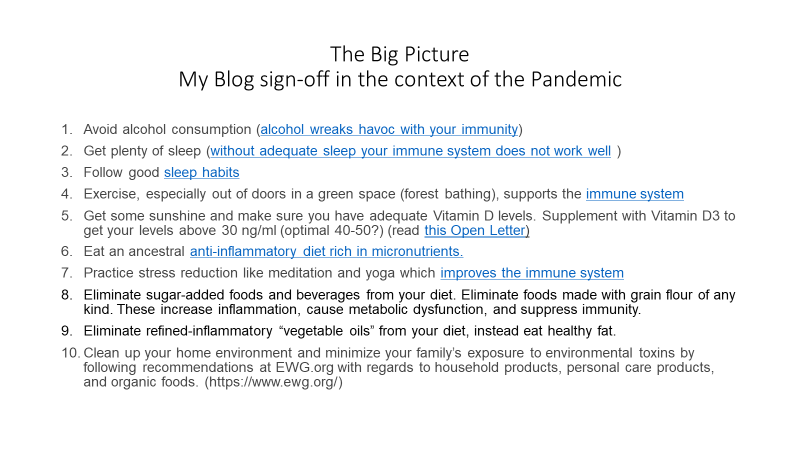
In the context of the COVID 19 pandemic I will close with the usual summary.

  1. Avoid alcohol consumption (alcohol wreaks havoc with your immunity)
  2. Get plenty of sleep (without adequate sleep your immune system does not work well )
  3. Follow good sleep habits
  4. Exercise, especially out of doors in a green space, supports the immune system
  5. Get some sunshine and make sure you have adequate Vitamin D levels. Supplement with Vitamin D3 to get your levels above 30 ng/ml, >40ng/ml arguably better.
  6. Eat an anti-inflammatory diet rich in micronutrients.
  7. Practice stress reduction like meditation and yoga which improves the immune system
  8. Eliminate sugar-added foods and beverages from your diet. These increase inflammation, cause metabolic dysfunction, and suppress immunity.
  9. Eliminate refined-inflammatory “vegetable oils” from your diet, instead eat healthy fat.
  10. Clean up your home environment and minimize your family’s exposure to environmental toxins by following recommendations at EWG.org with regards to household products, personal care products, and organic foods. (https://www.ewg.org/)
  11. Drink water filtered through a high quality system that eliminates most environmental toxins.
  12. If you are eligible for vaccination, consider protecting yourself and your neighbor with a few jabs. Age > 50 and/or risk factors means clear benefit from a booster.

THIS WEBSITE PROVIDES INFORMATION FOR EDUCATIONAL PURPOSES ONLY. CONSULT YOUR HEALTH CARE PROVIDER FOR MEDICAL ADVICE.

Eat clean, drink filtered water, love, laugh, exercise outdoors in a greenspace, get some morning sunlight, block the blue light before bed, engage in meaningful work, find a sense of purpose, spend time with those you love, AND sleep well tonight.

Doctor Bob
AHS 2022 Lecture, Acute and Long Covid, Nutritional and Lifestyle Immunology

I recently gave a talk at the AHS 2022 meeting held at UCLA. You can view the video here:

This first slide gives a good overview.

The presentation covers a quick review of my presentations given last year at the PAH 2021 annual meeting (virtual) with additional information on long Covid.

Multiple nutrients acting synergistically support a balanced response to viral infections, including SARS CoV-2. Here is a picture.

The take home message is that no single nutritional intervention is likely to have significant impact with an acute infection unless all but one nutritional component is optimal. Nevertheless, there is compelling evidence that Vitamin D deficiency is rampant in the developed world and if one nutritional intervention is likely to be of benefit, Vitamin D supplementation, particularly in high risk populations, presents the most likely candidate. As usual, preventive supplementation would be preferable to rescue high dose intervention.

In a study of frail elderly hospitalized patients, regular vitamin D supplementation was associated with decreased mortality as demonstrated here. Compared to no supplementation, regular supplementation was associated with a 93% reduction in risk of death.

A study from Spain with very high dose Vitamin D in the form of Calcifediol showed significant benefit in hospitalized patients, suggesting that Vitamin D deficiency was prevalent in that population and that such a treatment intervention should be widely considered.

Calcifediol Treatment and COVID-19-Related Outcomes

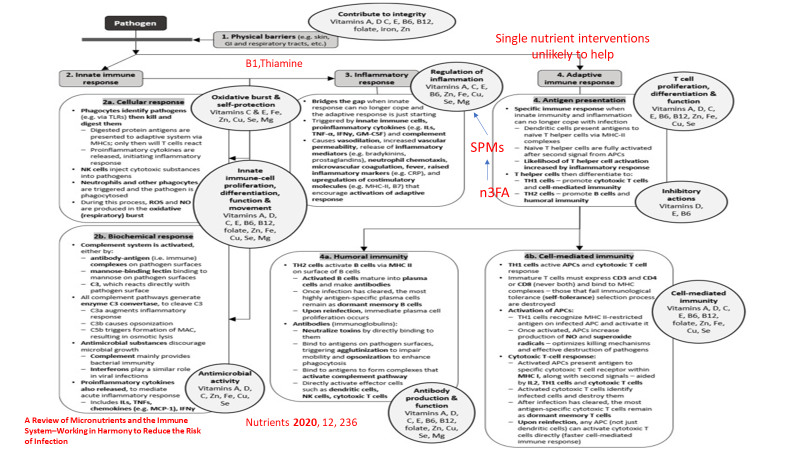
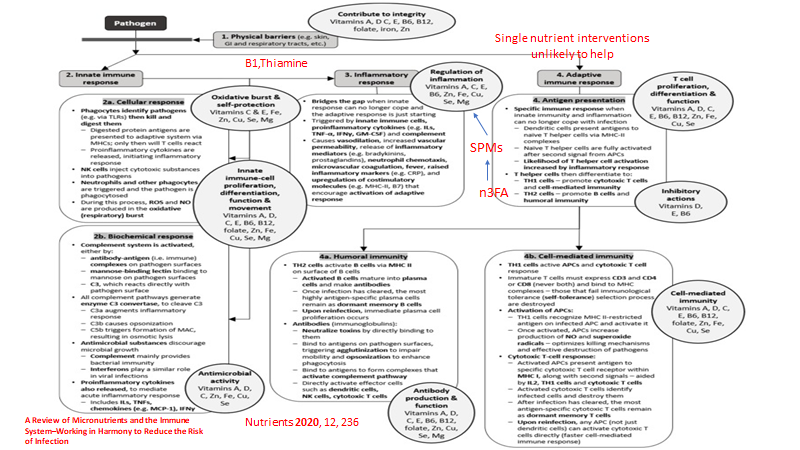
The following graphic from another nutrition review article, with red additions added by myself, demonstrates the complex interaction between nutrition and the two main components of our immune system, innate immunity (immediate response) and adaptive immunity (based on immune memory). Again red highlights added by yours truely.

And here is a slide from my lecture with quotes from that article.

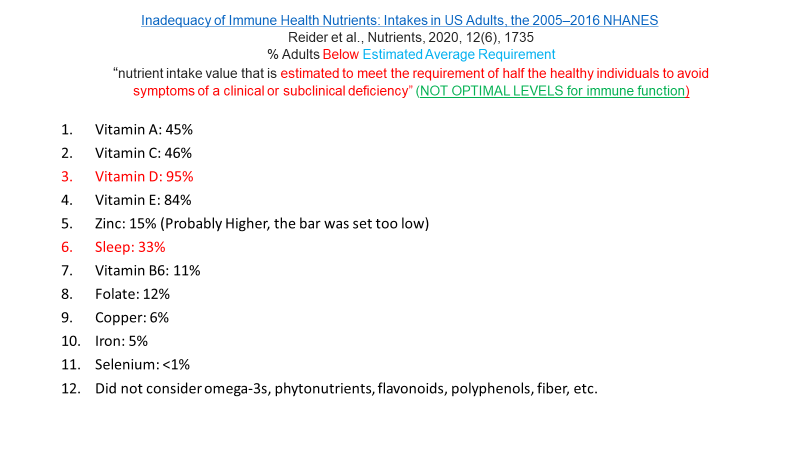
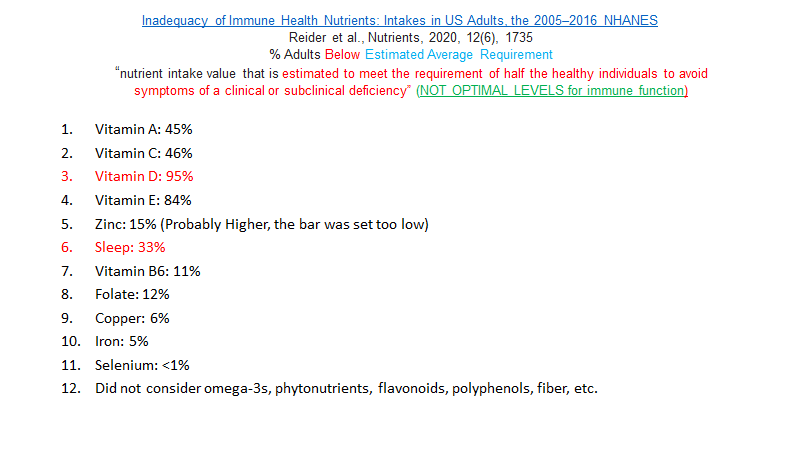
Yet most Americans are deficient in many of these essential nutrients as depicted here. The percentages represent the % of Americans that fall below the estimated amount required to prevent deficiency in HALF of adults (a very low standard).

The EAR is a very low bar to meet, yet many Americans fall below even that low standard.

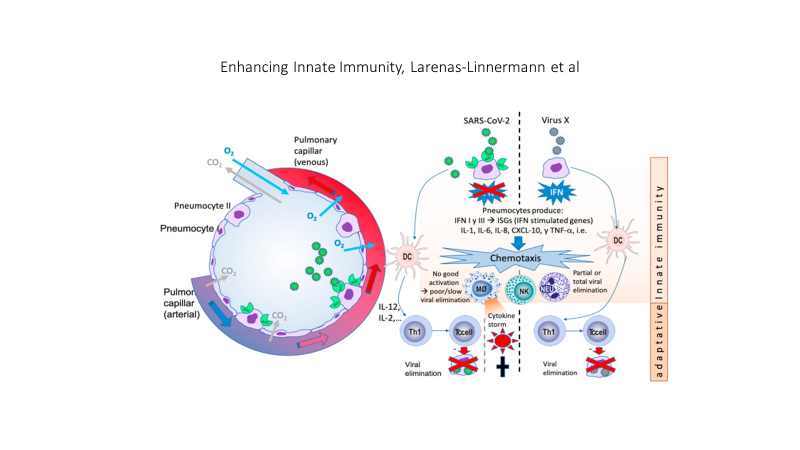
The SARS CoV2 virus interferes with a crucial component of the the initial (innate) immune response, the production of interferon 1 and the signaling of interferon one to immune cell mediators as depicted in this graphic.

SARS CoV2 on the left is compared to Virus X on the right. On the left interferon 1 (IFN) production and signaling is blocked by the virus, interfering with an effective and controlled immune response, on the right IFN is not blocked. A cascade of events results in TOO LITTLE, TOO LATE, AND THEN TOO MUCH of an immune response, producing a cytokine storm.

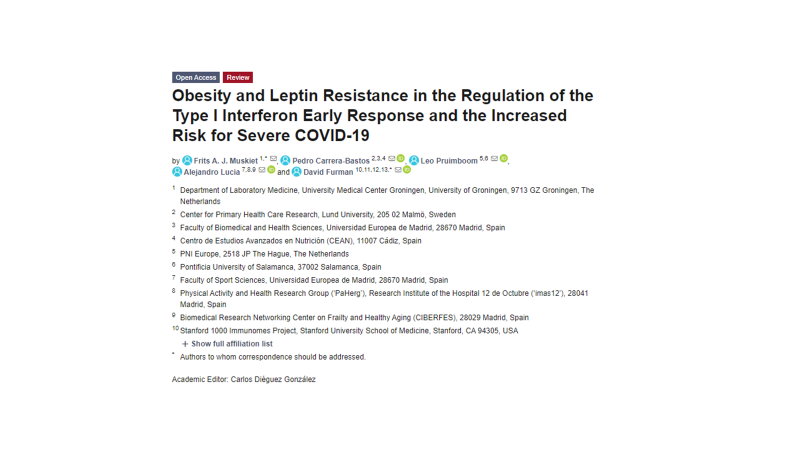
Obesity, insulin and leptin resistance, also interfere with the production and signaling of interferon. The result is that people with insulin and leptin resistance (pre-diabetes, Type 2 Diabetes as well as sarcopenia) experience a double hit. First the virus itself disrupts the immune response and superimposed upon the viral effect is the effect of insulin and leptin resistance on the immune response.

SOCS: suppressor of cytokine signaling. Several recent viral studies have shown that viral genes can hijack SOCS1 to inhibit host antiviral pathways, as a strategy to evade host immunity
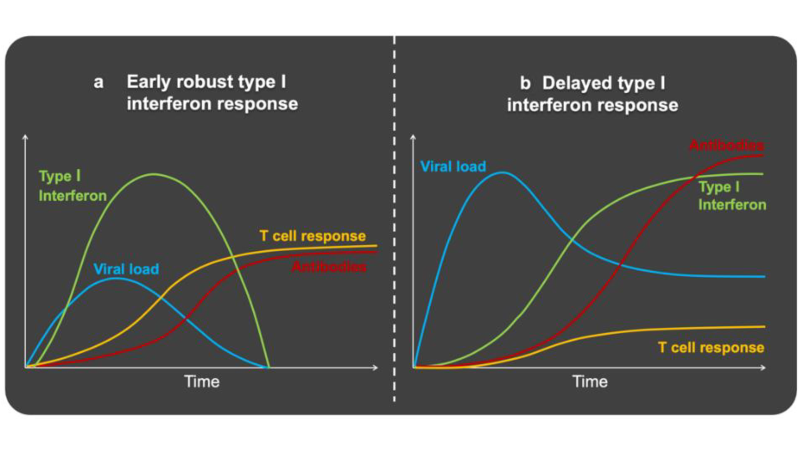
On the left Interferon production and signaling are normal and a successful immune response is mounted. On the right the presence of insulin and leptin resistance, associated with obesity results in an initial inadequate response and a late excessive response. TOO LITTLE, TOO LATE, THEN TOO MUCH.

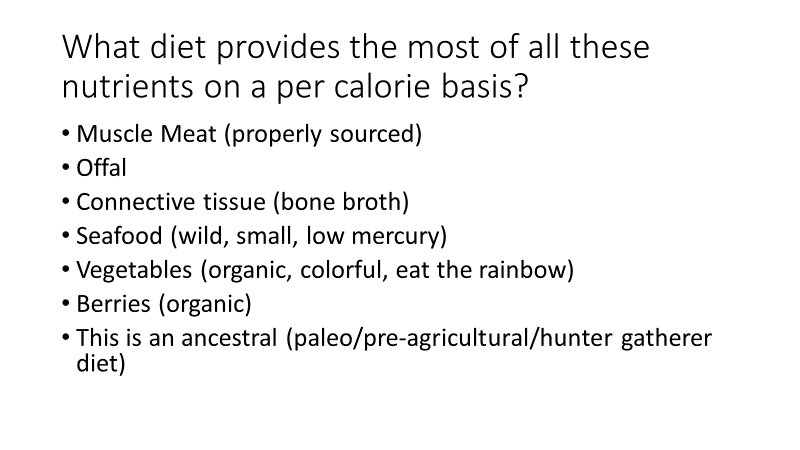
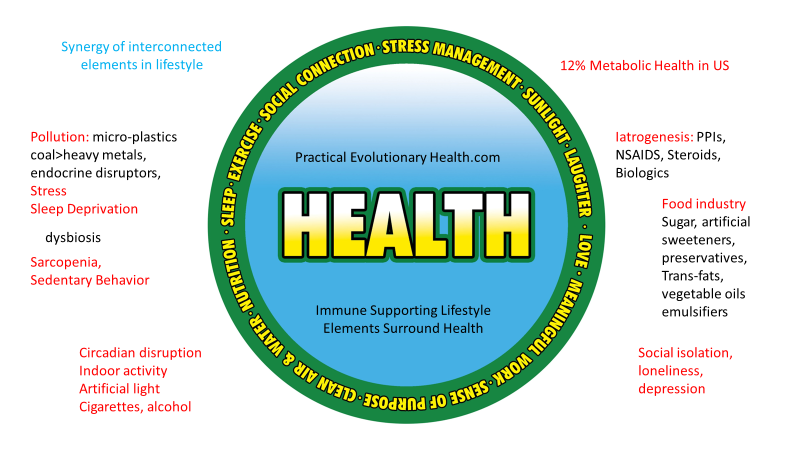
Factors that can quickly impact insulin and leptin resistance include all the components of an ancestral lifestyle depicted in my website graphic. A paleolithic or ancestral diet that eliminates sugar added foods and beverages, replacing those empty calories with nutrient dense foods, exercise, adequate restorative sleep, stress reduction, avoidance of environmental toxins, social connection. All of these affect health in general, mitigate insulin and leptin resistance, and support a balanced immune response to viral infection. The circle of health depicted below is surrounded by the many deleterious aspects of modern living. Thus, a mismatch between our evolutionary biology and present day life.

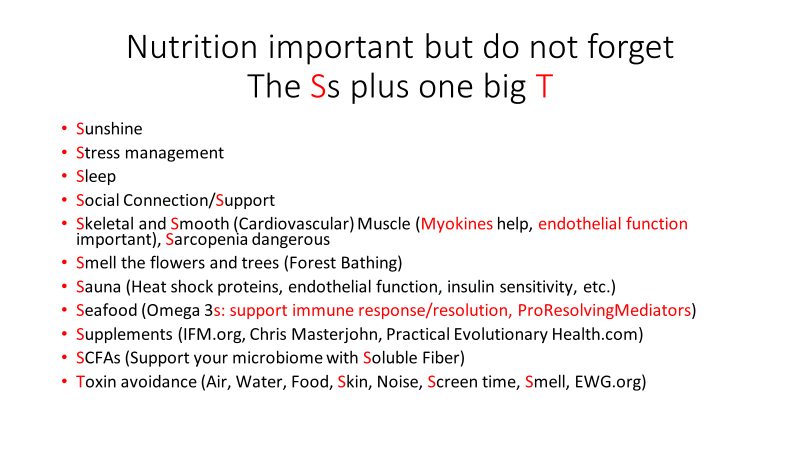
Here is a slide from my lecture that lists many lifestyle factors that can impact infection with any virus, including SARS CoV-2

My lecture also included discussion of Long COVID, theories of etiology and pathophysiology which will be discussed in my next post.

For the full lecture which is about 34 minutes long, please follow the link above.

THIS WEBSITE PROVIDES INFORMATION FOR EDUCATIONAL PURPOSES ONLY. CONSULT YOUR HEALTH CARE PROVIDER FOR MEDICAL ADVICE.

Eat clean, drink filtered water, love, laugh, exercise outdoors in a greenspace, get some morning sunlight, block the blue light before bed, engage in meaningful work, find a sense of purpose, spend time with those you love, AND sleep well tonight.

Doctor Bob
Long Covid: Vascular Inflammatory Response Mediated by non-classical monocytes.

Today I listened to Dr. Bruce Patterson discuss his research on Long-Covid.

Bruce Patterson was director of a virology lab at Stanford before establishing Incelldx, a biotech firm in the area of virus diagnostics. Bruce was interviewed today (second half of the program) on The People’s Pharmacy (NPR). The transcript and podcast will be available tomorrow at PeoplesPharmacy.com (show #1273)

Utilizing AI and data from over 10,000 patients, Incelldx has developed diagnostic tools to characterize the immune system dysregulation associated with long covid. According to Dr. Patterson’s research, Long-Covid involves “non-classical monocytes” that are reacting to remnant virus proteins (not RNA or DNA), producing a vascular inflammatory process. That was the missing link. Researchers were looking for RNA, but the problem appears to be in the monocyte reaction to remnant viral proteins that stimulate these specialized monocytes, producing a chronic vasculitis.

Here is a link to the Long Covid clinical program based upon this research.

https://covidlonghaulers.com/

The program involves immune testing by Incelldx and based on the results, treatment recommendations are made.

So far 2 drugs repurposed for long-Covid appear effective when used in combination.

A CCR5 antagonist (maraviroc) which has been used to treat HIV and a Statin medication which blocks binding of the monocytes to artery walls.

According to Dr. Patterson, Long Covid in many patients is a vascular inflammatory process, mediated by non-classical monocytes which are activated by viral remnant proteins.

Dr. Patterson has seen many patients respond to this drug combination. He uses an old, early statin drug (pravastatin) which has a low side effect profile compared to the more commonly used atorvastatin (which gave me severe myopathy, notorious for that problem but understated by drug company reports).

This is cutting edge, most physicians, even in university settings, are not aware of this diagnostic/therapeutic approach.

This is still considered experimental but appears to be very promising.

In the context of the COVID 19 pandemic I will close with the usual summary.

  1. Avoid alcohol consumption (alcohol wreaks havoc with your immunity)
  2. Get plenty of sleep (without adequate sleep your immune system does not work well )
  3. Follow good sleep habits
  4. Exercise, especially out of doors in a green space, supports the immune system
  5. Get some sunshine and make sure you have adequate Vitamin D levels. Supplement with Vitamin D3 to get your levels above 30 ng/ml. (read this Open Letter)
  6. Eat an anti-inflammatory diet rich in micronutrients.
  7. Practice stress reduction like meditation and yoga which improves the immune system
  8. Eliminate sugar-added foods and beverages from your diet. These increase inflammation, cause metabolic dysfunction, and suppress immunity.
  9. Eliminate refined-inflammatory “vegetable oils” from your diet, instead eat healthy fat.
  10. Clean up your home environment and minimize your family’s exposure to environmental toxins by following recommendations at EWG.org with regards to household products, personal care products, and organic foods. (https://www.ewg.org/)
  11. If you are over age 12 and eligible for vaccination, consider protecting yourself and your neighbor with vaccination.

THIS WEBSITE PROVIDES INFORMATION FOR EDUCATIONAL PURPOSES ONLY. CONSULT YOUR HEALTH CARE PROVIDER FOR MEDICAL ADVICE.

Eat clean, drink filtered water, love, laugh, exercise outdoors in a greenspace, get some morning sunlight, block the blue light before bed, engage in meaningful work, find a sense of purpose, spend time with those you love, AND sleep well tonight.

Doctor Bob
Nutrition and Lifestyle vs Pandemic

Earlier this year I gave 2 presentations on this topic at the (virtual) annual meeting of Physicians and Ancestral Health, a physician organization dedicated to incorporating evolutionary biology and lifestyle recommendations into the practice of medicine. Here is the first slide:

And here are some very important references:

Please note that this lecture was given before the delta variant arrived so the data applies to the pre-delta period.

MI= Myocardial Infarction (heart attack with loss of muscle), PE=Pulmonary Embolus, DVT= Blood Clots in legs, SIRS= Systemic Inflammatory Response Syndrome

I will skip several of the slides and get to the nutritional immunology and other lifestyle factors.

This slide shows many lifestyle factors that interact with the immune system. The “12% metabolic health” refers to a study demonstrating that only 12% of American adults are metabolically healthy, which will be explained later. Dysbiosis refers to an imbalance in gut bacteria favoring inflammation and immune compromise. The rest should be self explanatory but discussed in detail later in this series.

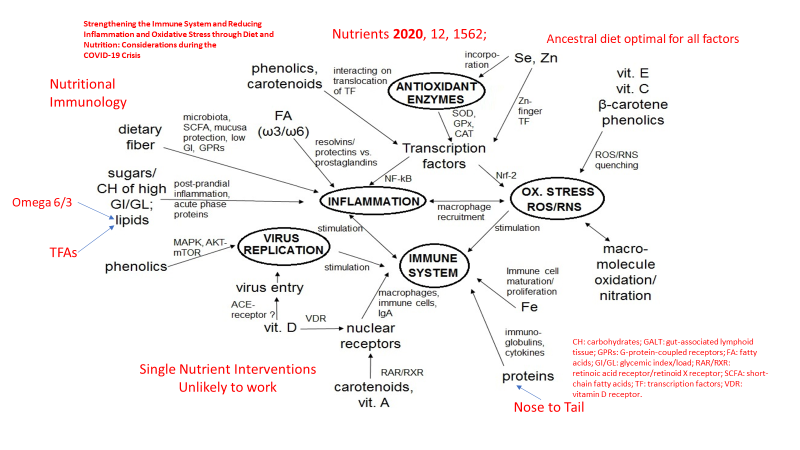
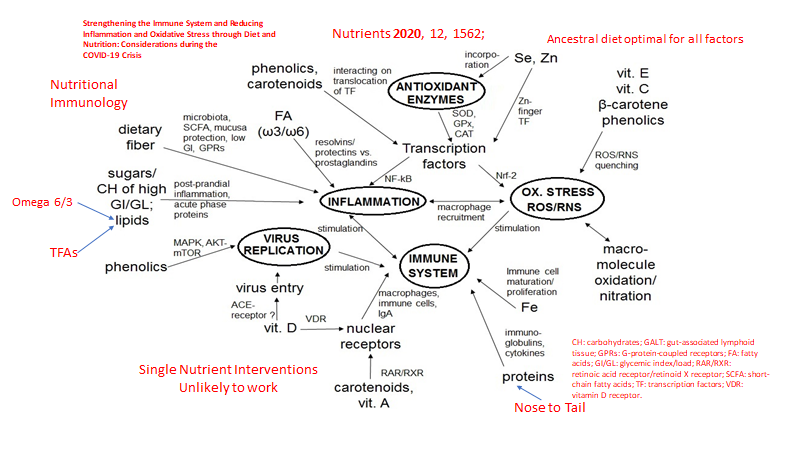
Here is the very busy slide that summarizes nutritional immunology:

w3/w6 refers to the omega 3 to omega 6 ratio in the diet, ROS= Reactive oxygen species (oxidative stress), CH: carbohydrates; GALT: gut-associated lymphoid
tissue; GPRs: G-protein-coupled receptors; FA: fatty acids; GI/GL: glycemic index/load; RAR/RXR:
retinoic acid receptor/retinoid X receptor; SCFA: short-chain fatty acids; TF: transcription factors; VDR:
vitamin D receptor.

Key points in this slide:

  1. Omega 3 fats from fatty fish fight inflammation, excess omega 6 fats from refined “vegetable oils” (corn, soy, cotton seed, sunflower seed, safflower, etc.) contribute to inflammation and blood clots, contributing to cytokine storm and bradykinin storm.
  2. Vitamin D interferes with the virus at multiple points.
  3. Adequate iron (Fe) from meat and seafood is essential for immune function (Iron from plant sources is much less bioavailable compared to meat and seafood.)
  4. Adequate complete protein (not available from vegan diets) is essential for immune function.
  5. Zinc and selenium (both found in seafood and meat) are essential for multiple protective pathways in the immune system (enhancing response to infection and mitigating excessive inflammatory response as cofactors for antioxidant enzymes)
  6. Sugar and high glycemic foods cause inflammation, high blood sugars suppress the immune system
  7. Dietary fiber supports a healthy gut microbiome which in turn suppresses inflammation and provides the gut lining with SFAs (gut epithelium requires SFAs for energy and function, gut barrier function needs SFAs)
  8. Phenolic compounds in colorful vegetables and berries modulate multiple essential immune pathways that can inhibit viral replication.
  9. Carotenoids, phenolics support several vital immune pathways.
  10. Omega 3 fats are the building blocks of chemicals that help resolve inflammation and mitigate against cytokine storm and bradykinin storm.
  11. Multiple vitamins and phenolics support our internal anti-oxidant system.
  12. To get a balanced protein intake we should eat “nose to tail”. Include connective tissue (home made bone broth is a great source) and organ meats (from grass fed/finished ruminants) in addition to muscle meat.

Here is another busy slide that presents more detail, note the reference at the bottom of the slide to read more.

Sorry for the small print but you can see the blow up on line by going here.

http://A Review of Micronutrients and the Immune System-Working …

So does the “Standard American Diet” meet these nutritional needs to support a healthy immune system?

The % above represent the % of American adults with intakes BELOW the EAR (Estimated Average Requirement) for various vitamins and minerals. But note the definition of EAR:

“nutrient intake value that is estimated to meet the requirement of half the healthy individuals to avoid symptoms of a clinical or subclinical deficiency” (NOT OPTIMAL LEVELS for immune function)


Note also that this study did not consider omega-3s, phytonutrients, flavonoids, polyphenols, fiber, etc., all of which are essential to a robust immune response to any virus including SARS CoV-2.

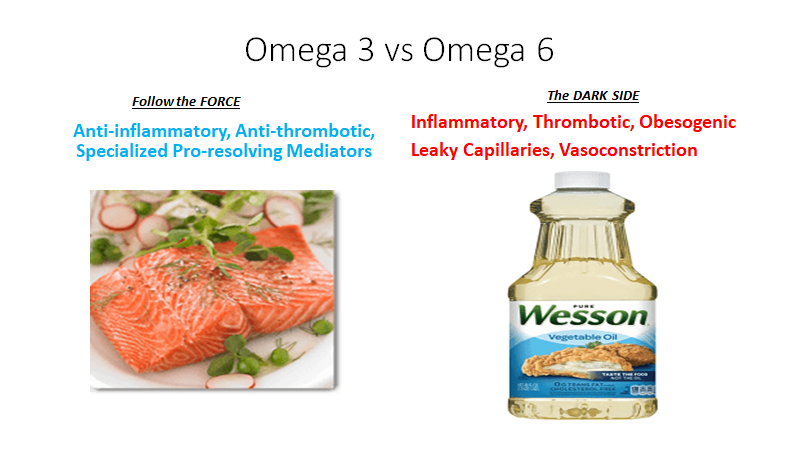
With regards to omega 3 vs omega 6 fats:

Omega 3 fats (EPA and DHA) found in seafood fights inflammation, blood clots. DHA and EPA are the building blocks of SPMs which help RESOLVE INFLAMMATION (MITIGATE CYTOKINE STORM)

We will return to this topic in my next post. We are just scratching the surface of a complex system.

In the context of the COVID 19 pandemic I will close with the usual summary.

  1. Avoid alcohol consumption (alcohol wreaks havoc with your immunity)
  2. Get plenty of sleep (without adequate sleep your immune system does not work well )
  3. Follow good sleep habits
  4. Exercise, especially out of doors in a green space, supports the immune system
  5. Get some sunshine and make sure you have adequate Vitamin D levels. Supplement with Vitamin D3 to get your levels above 30 ng/ml. (read this Open Letter)
  6. Eat an anti-inflammatory diet rich in micronutrients.
  7. Practice stress reduction like meditation and yoga which improves the immune system
  8. Eliminate sugar-added foods and beverages from your diet. These increase inflammation, cause metabolic dysfunction, and suppress immunity.
  9. Eliminate refined-inflammatory “vegetable oils” from your diet, instead eat healthy fat.
  10. Clean up your home environment and minimize your family’s exposure to environmental toxins by following recommendations at EWG.org with regards to household products, personal care products, and organic foods. (https://www.ewg.org/)
  11. If you are over age 12 and eligible for vaccination, consider protecting yourself and your neighbor with vaccination.

THIS WEBSITE PROVIDES INFORMATION FOR EDUCATIONAL PURPOSES ONLY. CONSULT YOUR HEALTH CARE PROVIDER FOR MEDICAL ADVICE.

Eat clean, drink filtered water, love, laugh, exercise outdoors in a greenspace, get some morning sunlight, block the blue light before bed, engage in meaningful work, find a sense of purpose, spend time with those you love, AND sleep well tonight.

Doctor Bob
Autoimmunity: Another reason why VACCINE is safer than INFECTION.

There is growing evidence that self-attacking ‘autoantibodies’ could be the key to understanding some of the worst cases of COVID-19.

This might explain why lung damage and other organ damage sometimes continues to worsen AFTER the body seems to have cleared the SARS-CoV-2 virus. And it could explain why some individuals fail to mount an adequate immune response early in the disease.

With respect to the later, in September 2020 researchers at the Rockefeller University reported that > 10% of 987 patients with severe COVID-19 infection had antibodies that blocked type 1 interferon molecules, an essential part of the innate immune system.

Other researchers have screened patients with varying severity of COVID-19 and found higher prevalence of autoantibodies against the immune system in infected individuals compared to uninfected controls.

Yet another study found that some infected individuals had autoantibodies against proteins in their blood vessels, heart and brain.

Many patients with severe COVID suffer from life threatening blood clots. Phospholipids play a major role in controlling blood clotting. 52% of 172 people hospitalzied with COVID 19 were found to have anti-phospholipid antibodies.

Annexin A2 is a human protein that protects the integrity of small blood vessels in the lung. Researchers have found a significantly higher average level of anti-annexin A2 antibodies in people who died of COVID-19 compared to patients with less severe illness.

So far it is unclear whether the virus caused these antibodies or whether these unlucky individuals had higher than normal amounts of auto-antibodies prior to infection.

A paper published in the immunology literature just yesterday might shed some light on this issue as well as on the topic of LONG COVID.

We sought to determine whether immune reactivity occurs between anti-SARS-CoV-2 protein antibodies and human tissue antigens, and whether molecular mimicry between COVID-19 viral proteins and human tissues could be the cause.

In other words, they tested antibodies against the SARS-CoV-2 virus to see whether they reacted against various kinds of human tissue. Here is what they found.

We found that SARS-CoV-2 antibodies had reactions with 28 out of 55 tissue antigens, representing a diversity of tissue groups that included barrier proteins, gastrointestinal, thyroid and neural tissues, and more.

This extensive immune cross-reactivity between SARS-CoV-2 antibodies and different antigen groups may play a role in the multi-system disease process of COVID-19, influence the severity of the disease, precipitate the onset of autoimmunity in susceptible subgroups, and potentially exacerbate autoimmunity in subjects that have pre-existing autoimmune diseases.

You can read the full study here: https://www.frontiersin.org/articles/10.3389/fimmu.2020.617089/full

Cross reactivity between antibodies against COVID-19 virus and human tissue was found for every major organ system in the human body.

The concept of “molecular mimicry” has been well described in auto-immunity for many years. This occurs when a portion of a foreign protein (on for example a virus or bacterium) is identical to a portion of a protein found in human tissue. When the immune system responds to invasion by a virus or bacteria it creates antibodies to various proteins on the invader. But in so doing the anti-bodies can react against human tissue that shares a small common string of amino acids (referred to as an epitope).

A famous example of molecular mimicry occurs with Rheumatic Heart Disease in which antibodies against the bacteria responsible for Strep Throat cross react with heart tissue causing destruction of heart valve tissue and a resultant leaky heart valve. In this situation cross reaction can also occur with tissue in joints resulting in arthritis, another hallmark of rheumatic fever. These were serious complications of Strep Throat before Penicillin became widely available.

So far we know that sicker COVID-19 patients demonstrate antibodies against multiple types of human tissue.

We also know that antibodies that react against various portions of the virus can also react against human tissue.

Finally we know that multi-organ failure is an inflammatory response wherein the immune system, rather than the virus, causes organ failure.

It would be a reasonable conclusion that auto-immunity can acutely contribute to cytokine and bradykinin storm.

It would also be a reasonable conclusion that auto-immunity contributes to LONG COVID.

So why would that make an mRNA vaccine safer?

The mRNA vaccine results in antibodies against one part of the virus (one epitope, the spike protein).

But infection results in antibodies against MULTIPLE PARTS OF THE VIRUS (multiple epitopes). Because multiple antigens or epitopes are involved in the immune response to infection, it increases the probability that cross reaction with multiple human tissues can result.

From an autoimmune perspective, the mRNA vaccine is much safer.

Obviously, given the fact that over 400,000 deaths have resulted in the US from this infection and no deaths have been attributed to the vaccine, the vaccine appears to be much safer than infection. Both the Pfizer and Moderna vaccine have decreased the risk of symptomatic infection by 95%. Severe symptomatic infection can lead to death. Even asymptomatic infection can cause LONG COVID. The risk-benefit analysis overwhelmingly favors the vaccine.

For a deeper dive into auto-immunity and COVID-19 here are a few more references:

High frequency of cerebrospinal fluid autoantibodies in COVID-19 patients with neurological symptoms

Autoantibodies against type I IFNs in patients with life-threatening COVID-

Diverse functional autoantibodies in patients with COVID-19

Prothrombotic autoantibodies in serum from patients hospitalized with COVID-19

 Association between anti-interferon-alpha autoantibodies and COVID-19 in systemic lupus erythematosus

Autoantibodies related to systemic autoimmune rheumatic diseases in severely ill patients with COVID-19

 IgM autoantibodies recognizing ACE2 are associated with severe COVID-19

Is the association between IgG anti‐cardiolipin autoantibodies and COVID‐19 severity related to the lung injury or to the SARS‐CoV‐2 infection?

Do cross-reactive antibodies cause neuropathology in COVID-19?

Immunoserologic detection and diagnostic relevance of cross-reactive autoantibodies in coronavirus disease 2019 patients

Anticardiolipin IgG Autoantibody Level Is an Independent Risk Factor for COVID‐19 Severity

Rheumatic manifestations of COVID-19: a systematic review and meta-analysis

The immunology of multisystem inflammatory syndrome in children with COVID-19

Clinical, Serological, and Histopathological Similarities Between Severe COVID-19 and Acute Exacerbation of Connective Tissue Disease-Associated 

In the context of the COVID 19 pandemic I will close with the usual summary.

  1. Avoid alcohol consumption (alcohol wreaks havoc with your immunity)
  2. Get plenty of sleep (without adequate sleep your immune system does not work well )
  3. Follow good sleep habits
  4. Exercise, especially out of doors in a green space, supports the immune system
  5. Get some sunshine and make sure you have adequate Vitamin D levels. Supplement with Vitamin D3 to get your levels above 30 ng/ml. (read this Open Letter)
  6. Eat an anti-inflammatory diet rich in micronutrients.
  7. Practice stress reduction like meditation and yoga which improves the immune system
  8. Eliminate sugar-added foods and beverages from your diet. These increase inflammation, cause metabolic dysfunction, and suppress immunity.
  9. Eliminate refined-inflammatory “vegetable oils” from your diet, instead eat healthy fat.
  10. Clean up your home environment and minimize your family’s exposure to environmental toxins by following recommendations at EWG.org with regards to household products, personal care products, and organic foods. (https://www.ewg.org/)

THIS WEBSITE PROVIDES INFORMATION FOR EDUCATIONAL PURPOSES ONLY. CONSULT YOUR HEALTH CARE PROVIDER FOR MEDICAL ADVICE.

Eat clean, drink filtered water, love, laugh, exercise outdoors in a greenspace, get some morning sunlight, block the blue light before bed, engage in meaningful work, find a sense of purpose, spend time with those you love, AND sleep well tonight.

Doctor Bob
COVID 19 Immune Response, How does it fail?

Dr. Akiko Iwasaki, an immunologist at Yale, has led an amazing research team from the start of this pandemic, analyzing the immune response of patients sick with COVID 19. She has co-authored a review of the immune response to be published in the January edition of Scientific American.

Iwasaki A, Wong P.  The immune havoc of COVID-19.  Scientific American, January 2021, 35-41.

Here is the link.

http://The Immune Havoc of COVID-19 – Scientific American

Before reading that article, a good place for a lay person to start would be her 8 minute youtube video, Immunology 101.

After watching that video and reading the Scientific American article, if you want a deeper dive into some of her team’s research, watch this video (28 minutes).

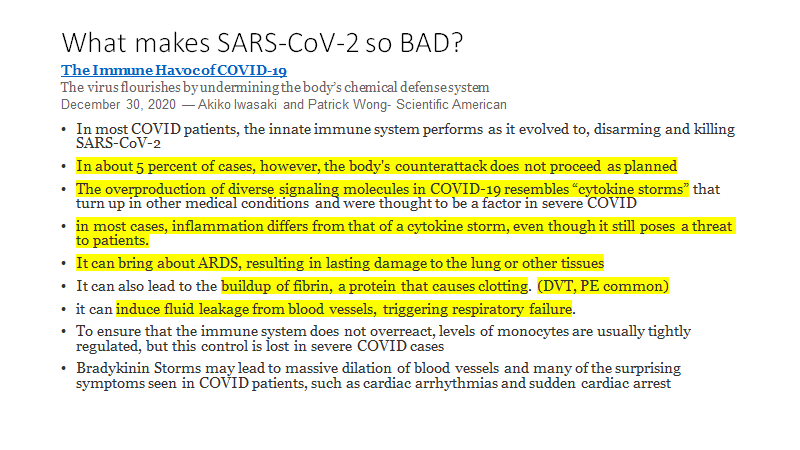
The Scientific American article discusses many of the unique characteristics of SARS CoV-2 compared to two previous corona viruses SARS CoV-1 and MERS. SARS CoV-2 which causes the illness called COVID-19, evades the human immune system in many ways. Those who become seriously ill, requiring ICU care, seem to suffer a time lag in their immune response compared to those who suffer less severe illness. In addition, the T-cell response in sicker patients is subdued and inadequate to clear the virus. Finally, a hyper-inflammatory response is present in most who succumb to the illness. Dr. Iwasaki discusses how the Cytokine storm of COVID-19 differs significantly from that seen with other viral infections and likely includes a new phenomenon referred to as a Bradykinin Storm which involves another major component of the immune system. There may even be an auto-immune component to this disease in some or many patients.

Early in the pandemic, physicians did detect elevated cytokines in patients, but the amount of these proteins and the subsequent inflammatory state they evoked differed from that of a classic cytokine storm.

We observed high levels of IL-5 and IL-17,cytokines not classically associated with antiviral immune activity. Instead these cytokines initiate a seemingly misguided
response—one better suited for infections by parasites and fungi.
We have yet to understand whether this response causes damage
to tissue or just diverts resources the body needs to fight the virus.

In the second video linked above Dr. Iwasaki describes how men and women demonstrate different immune responses with a higher fatality rate observed among men.

Much has been learned but much remains to be discovered as this pandemic continues to unfold.

There are a few clear facts emerging from multiple studies and observations.

Masks and social distancing work. Masks protect both the wearer and those around the wearer.

Most transmission occurs by droplets and aerosol (emitted from the nose and mouth).

Six feet of distancing is helpful but does not guarantee protection. Cases of transmission in restaurants via air flow from HVAC units have been described in which the infected person transmitting disease is far removed from the people becoming infected. (aerosol spread). Droplets and aerosol studies have demonstrated that coughing and sneezing can project infectious particles up to 26 feet.

The most dangerous circumstances for transmission include indoor confined spaces, with multiple people interacting for long periods of time (restaurants, bars, meeting rooms, parties, social gatherings).

Ventilation and air turnover are important factors.

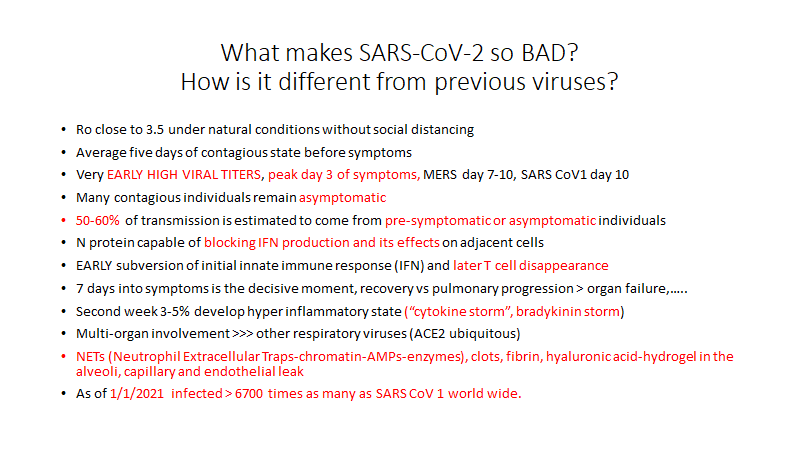
This virus is unique in that higher viral loads and transmissibility occur BEFORE ONSET OF SYMPTOMS, rendering this virus more dangerous than previous pandemics. This can occur in patients who later develop symptoms or in people who carry the virus without ever developing any symptoms.

Some estimate that as much as 50% of transmission occurs from people exhibiting no symptoms.

Finally, “herd immunity” for infectious disease has never been achieved by reaching a critical number of infected people. “Herd immunity” has only been achieved in the past with vaccination programs. Herd immunity does not mean that disease transmission ceases, it means that transmission rates are very low.

What is herd immunity?

When most of a population is immune to an infectious disease, this provides indirect protection—or herd immunity (also called herd protection)—to those who are not immune to the disease.

For example, if 80% of a population is immune to a virus, four out of every five people who encounter someone with the disease won’t get sick (and won’t spread the disease any further). In this way, the spread of infectious diseases is kept under control. Depending how contagious an infection is, usually 50% to 90% of a population needs immunity to achieve herd immunity.

Most experts estimate that vaccination of at least 70% of the population will be required to reach some degree of herd immunity for COVID-19.

Here is a 2 minute discussion of herd immunity from Johns Hopkins before the Pfizer-BioNtech and Moderna vaccines were given Emergency Use Authorization by the FDA.

In the context of the COVID 19 pandemic I will close with the usual summary.

  1. Avoid alcohol consumption (alcohol wreaks havoc with your immunity)
  2. Get plenty of sleep (without adequate sleep your immune system does not work well )
  3. Follow good sleep habits
  4. Exercise, especially out of doors in a green space, supports the immune system
  5. Get some sunshine and make sure you have adequate Vitamin D levels.
  6. Eat an anti-inflammatory diet rich in micronutrients.
  7. Practice stress reduction like meditation and yoga which improves the immune system
  8. Eliminate sugar-added foods and beverages from your diet. These increase inflammation, cause metabolic dysfunction, and suppress immunity.
  9. Eliminate refined-inflammatory “vegetable oils” from your diet, instead eat healthy fat.
  10. Clean up your home environment and minimize your family’s exposure to environmental toxins by following recommendations at EWG.org with regards to household products, personal care products, and organic foods. (https://www.ewg.org/)

THIS WEBSITE PROVIDES INFORMATION FOR EDUCATIONAL PURPOSES ONLY. CONSULT YOUR HEALTH CARE PROVIDER FOR MEDICAL ADVICE.

Eat clean, drink filtered water, love, laugh, exercise outdoors in a greenspace, get some morning sunlight, block the blue light before bed, engage in meaningful work, find a sense of purpose, spend time with those you love, AND sleep well tonight.

Doctor Bob