Category Archives: Uncategorized

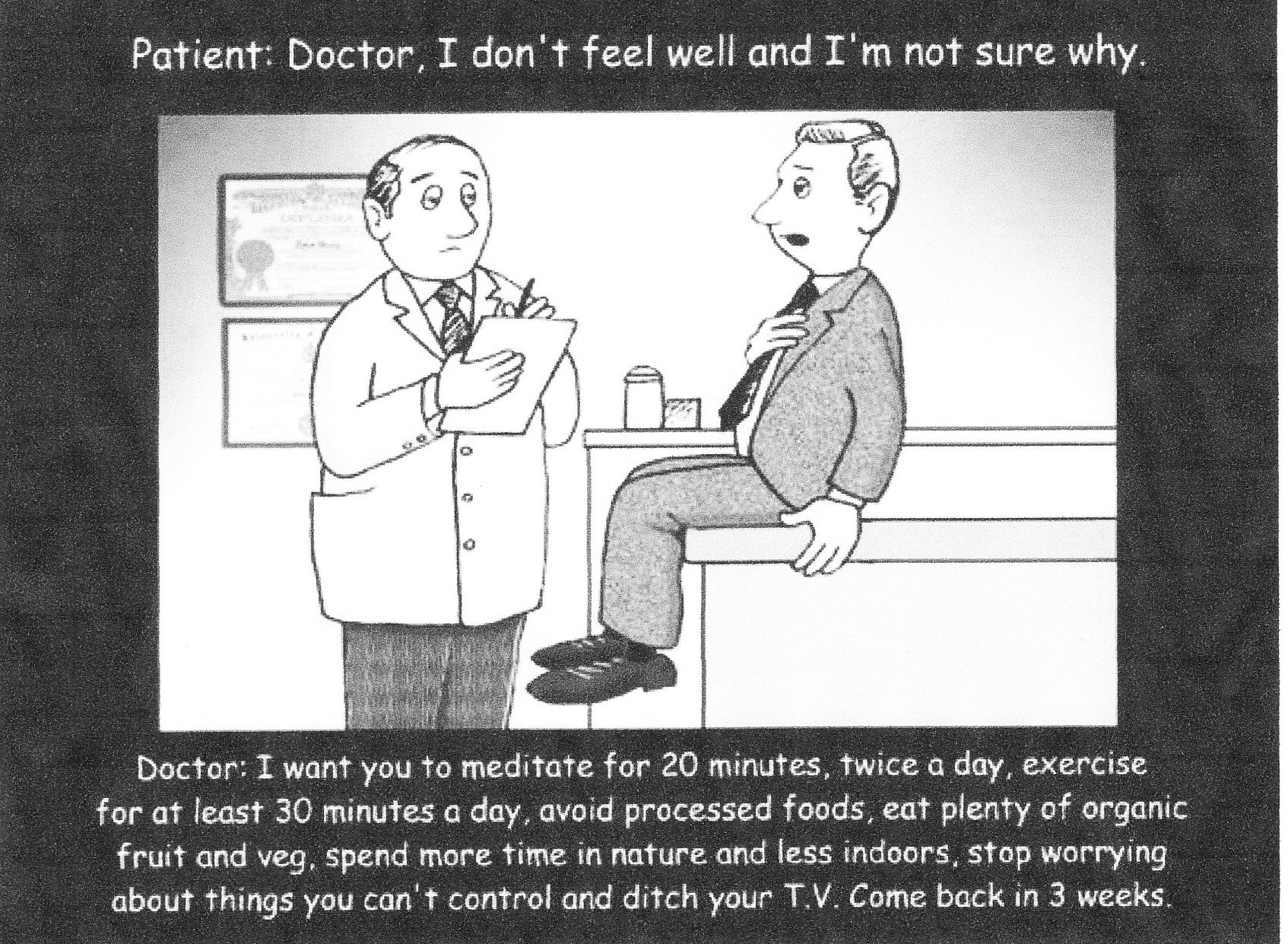
Cartoon humor: A Prescription for Health!


prescription-for-exercise-cropped

Hat tip to Tommy Wood MD, PhD for introducing me to this great cartoon.

So what would happen if your doctor prescribed this? Would you be shocked? Would you follow the advice? Sadly few doctors make such recommendations as explicitly as this cartoon and fewer patients follow the advice.

How important are the elements in this advice?

They are essential. We too often focus on dietary concerns at the expense of ignoring other important low hanging fruit. Early morning  outdoor exercise with exposure to natural light in a green space, even on a cloudy or rainy day, is essential for health. Why? There are many reasons. Click the link above to read fitness expert Darryl Edward’s discussion with references. In fact outdoor exercise in a greenspace is more beneficial than the same exercise indoors. The reasons are many, including but not limited to Vitamin D production.

Early daytime exposure to natural outdoor light helps to maintain our Circadian rhythm and align the biologic clock in all of our cells and organs with the central biological Circadian clock in our brain. Most folks do not know that we have a biologic clock deep within our brain and that all the organs and cells of our body also have clocks. They all need to be synchronized with each other and with the sun for optimal health. When they are not synchronized bad things happen. Night shift workers and other folks with disturbed sleep have higher rates of cancer , depressionhypertension, heart attack and stroke.

Maintaining our circadian rhythm is vital to achieving adequate high quality restorative sleep. In turn, obtaining adequate restorative sleep contributes to lower cardiovascular disease risk in addition to four traditional lifestyle risk factors.

Exposure to artificial light at night disrupts our circadian rhythm and impairs the onset of sleep.

In medical school I learned that our retina has two cell types, rods and cones. But advances in science have revealed a  third cell type called retinal ganglionic cells. 

These cells are  particularly sensitive to blue light and directly connected to our central biological clock . Exposure to artificial light, especially from TV screens, computers, cell phones and other electronic devices after sunset disrupts our sleep cycle and delays the onset of sleep. That is why wearing blue light filtering glasses in the evening helps many folks to improve their sleep quality and duration.

Sleep deprivation for even one night causes elevation in interleukin 6 levels the following day. Interleukin 6 suppresses immune function and excessive levels cause bone and tissue damage (especially cardiovascular). Sleep deprivation  increases  Stress hormones (cortisol, adrenalin), decreases prolactin and Growth hormone , and decreases the nightly production of ATP .

Melatonin , often called the sleep hormone, is produced most abundantly during restorative sleep and essential for tissue healing, immune function, cancer prevention, and defense against tissue oxidation. These are just a few of the roles melatonin and sleep cycles play in determining our health..

So exercise outdoors in a green space daily to help synchronize your biologic clock with the sun, dim the lights in the evening and if you must watch TV or work on electronic devices before bed wear Blue Light filter glasses .

Of course eating an abundance of colorful fresh organic vegetables and fruits, and practicing some stress reduction techniques every day are equally important and essential to health and functional status.

Finally, not mentioned in the cartoon above is another healthy lifestyle choice, intermittent fasting (IF). IF will be discussed in the next post.

Until then, sleep well, exercise regularly out doors in a green space environment, eat clean, learn and practice some regular stress reduction techniques and read the next post about IF.

Bob Hansen MD

The Obesity Code, a must read book by Dr. Jason Fung.

Doctor Jason Fung just published a terrific book titled The Obesity Code: Unlocking the Secrets of Weight Loss: 

Dr. Fung’s genius excels at simple, direct explanations with clarity and humor. His analogies are often hilarious and through his humor and logic he communicates simple but important truths. The major message is that obesity is a hormonal problem. Obesity is not a disease of excess caloric intake, nor is it a disease of sedentary lifestyle. Dr. Fung cites study after study in which obese patients (young and old alike) consumed less calories and exercised more with dismal results. He reviews the medical literature on the effects of refined carbohydrates and sugar on insulin and other hormones. He explains how sustained high insulin levels cause insulin resistance and weight gain. He clearly and decisively explains how 100 calories of sugar or flour effects the human body in a manner immensely different from 100 calories of broccoli.

“Have you ever seen anyone get fat from eating too much broccoli?”

Most importantly, Dr. Fung provides the solution that has helped hundreds of his patients. The solution is elimination of refined carbohydrates and sugar in combination with intermittent fasting. Intermittent fasting (consuming only water, coffee, tea, broth) for 24 -36 hours a few to several times per month helps to reset the brain’s set point for body weight. When combined with restriction of sugar and refined carbohydrate (foods made with flour) intermittent fasting presents a powerful tool to not only lose weight but to manage diabetes and prevent the many complications of obesity and diabetes.

Intermittent fasting increases the human metabolic rate, Your body actually burns more calories at rest per hour during fasting. The effects of intermittent fasting are distinctly different from what has been referred to as the “starvation response”. The “starvation response” ironically and confusingly refers to human studies that restricted (reduced) caloric intake but continued low calorie meals throughout the day.  It is unfortunate that those studies coined the term “starvation response” which is a decrease in resting metabolic rate. Caloric restriction diets reduce the human metabolic rate and therein lies the cause for the failure of all caloric restriction diets.

The confusion of these two approaches and their effects on human metabolism have clouded the discussion of obesity for decades.

Dr. Fung’s communication skills can be enjoyed by reading his book and viewing his many talks on YouTube.

His book and lectures should be mandatory for every medical student, physician, nutritionist and public health official. His book’s exhaustive medical references document the science that supports his theory and his clinical solution.

So take a leap, click on the link above for his book and the links below for some of his videos which are free on-line.

I think that Dr. Fung’s book is the most important book published on this topic in the 21st Century. His work will have profound influence during the next few decades. I encourage you to enjoy his genius.

Bob Hansen MD

The BigFatFix, a crowd funded film that explores the proper nutritional approach to diabetes epidemic

This new film created by a GP in UK, funded by small contributions, describes how elimination of added sugar and implementation of carbohydrate restriction can cure diabetes and result in weight loss. The film also covers how the low-fat craze, based on bad science (ignoring the full data) began with Ancel Keyes and evolved into arguably the worst public health disaster experienced by the modern world.

Bariatric surgery is NOT superior to lifestyle changes

There have been multiple studies comparing “lifestyle” interventions to bariatric surgery in treating obesity and diabetes. Repeatedly the authors conclude that bariatric surgery is superior to “lifestyle” interventions.

But none of these studies have utilized very low carbohydrate diets or medically supervised fasting as a lifestyle intervention. Instead, the diets employed for the “lifestyle” intervention are typically an ADA calorie restricted low-fat diet. I find this very frustrating as a physician.

The science in this area has demonstrated that very low carbohydrate diets consistently out-perform the low fat calorie restricted diet in terms of weight loss, blood sugar control, blood pressure control and lipid profiles.

Bariatric surgery carries a mortality rate of up to 3% depending on the surgeon, hospital and other circumstances. As an anesthesiologist and pain management physician I have seen multiple complications of bariatric surgery including but not limited to multiple chronic nutritional deficiencies (malabsorption), hernias, sepsis, renal failure, rhabdomyalisis, respiratory failure requiring prolonged ventilation, multi-organ failure requiring prolonged ICU care, and death.

And although many patients have profound weight loss in the first year after bariatric surgery many patients ultimately gain back most of the weight initially lost.

We need studies that compare bariatric surgery to very low carbohydrate and paleo diets. We need studies that compare bariatric surgery to intermittent medically supervised fasting. Until those studies are performed we should not conclude that bariatric surgery is superior to lifestyle interventions, particularly given the high complication rates of this surgery and the proven effects of VLC diets and medically supervised fasting.

Here are links to videos that discuss this topic.

They are all worth watching.

The SkinnyNews-Tim Noakes

The Aetiology of Obesity Part 1 of 6: A New Hope

The Science and Practice of Low-Carb Diets {Duke University Office Hours}

Prof. Tim Noakes; Medical aspects of the low carbohydrate lifestyles

Low-Carb Experts: Eric Westman, MD, MHS – Segment One (9:30)

Dr Eric Westman – Duke University New Atkins Ketogenic Diet for Weight Loss and Health

Dr Eric Westman about the new Atkins diet, part 1/2

Debunking Low Carb Myths with Dr. Eric Westman

Insulin Toxicity and How to Cure Type 2 Diabetes

How to Reverse Type 2 Diabetes Naturally

I have previously discussed the issue of carbohydrate restriction, diabetes and obesity with multiple scientific references provided in previous posts.

Peace,

Bob Hansen MD


Nutrition Journals and the influence of the food industry

Ever wonder why the public is so confused about nutrition recommendations? Just follow the money and you will understand that most of the professional societies that publish nutrition articles are funded by big food companies that are trying to sell more sugar, refined carbs and junk food. I recently read an excellent post about this topic here:

The Vilest Villain: American Society of Nutrition

This theme is repeated by medical journals that are “The Official Journal of the Society of >>>>>>” Just fill in the blanks for just about any medical society. Funding comes from big pharmaceutical companies the same way that funding in the nutrition Journals comes from large (junk) “food” manufacturers.

Don’t get me wrong, there are plenty of very valuable, life-saving drugs out there.

But most chronic human disease in developed societies is generated by various combinations of poor nutrition, lack of exercise, disruption of circadian rhythm, inadequate restorative sleep, stress and lack of social support systems.

The obesity and diabetes epidemics continue to worsen yet the failed dietary advise of major health organizations is slow to respond to the data. Excess refined carbs (especially in the form of “food” made with flour) and added sugar (especially in the form of HFCS) are the major driving forces for obesity, diabetes and cardiovascular disease. Red meat is not the culprit, provided the meat is properly sourced (hormone and antibiotic free, grass fed) and cooked in a manner that does not create carcinogens and inflammatory mediators (cook with slow, low, moist heat, high temperature grilling and smoking cause problems, but that topic  is for another post).

Americans consume an average 130 pounds per year of added sugar and 140 pounds per year of refined flour. Those are averages so there are many people who consume more. The added sugar is not the white stuff people put in their coffee. It comes in all sorts of forms but is found in energy drinks, soda, lattes and mochas, salad dressing,  ketchup, canned soups, canned vegetables, white AND whole grain breads, pasta (even “whole grain”), crackers, breakfast cereal,  just about any packaged food that has more than one ingredient on the label. These foods represent 70% of the American diet. The problems created by this situation are enormous and will bankrupt our “healthcare system”. This is a cultural and economic problem.

The solutions are simple but largely ignored in our society. We are creatures of habit and convenience.

Eat whole foods, nothing from a package that has more than one ingredient. Eat meat, seafood, poultry, fresh organic vegetables (6-9 servings per day), fresh organic fruits, and nuts. Meat should be hormone and antibiotic free (free range, grass fed). Seafood should be wild. Poultry should be free range and the eggs should come from free range chickens, ducks, geese.

Do not worry about eating fat as long as it comes from healthy animals and sources such as coconut oil, extra-virgin olive oil, avocado oil and clarified butter (ghee).

Do not use any “vegetable” oils (corn, soy, and other oils from grains or seeds) The vegetable oils are highly refined and inflammatory. They contain easily oxidized omega 6 fats that feed the production of inflammatory mediators in your body and create oxidized LDL leading to atherosclerosis.

Exercise daily, preferably outside in a green space. Twice per week spend 20-30 minutes  doing resistance training (lift weights, work against the resistance of bands, use your own body weight doing pushups, pull-ups etc)

Reduce stress with mediation, yoga, tai chi, dancing, engaging in fun sports and social activities. Walk on the beach, by a lake, river or stream, in the woods, listen to music.

Get some sunshine regularly especially during the morning to get your circadian rhythm in order and to produce adequate amounts of vitamin D.

Spend time with family, friends and colleagues who are supportive and fun to be around.

Sleep in the dark.

Get at least 7 hours of sleep per night. Avoid TV, computer screens and other electronic devices for at least 2 hours before bedtime.

Unplug from the internet, email, etc on a regular basis.

We evolved as hunter-gatherers.

Peace

Bob Hansen MD


Still want a doughnut or cereal for breakfast?

A recent study has demonstrated that brain deterioration detected by MRI scan seems to be linked to higher blood sugar levels even within the “normal range”.

Here are some important quotes from a Medscape discussion:

“Previous studies have shown that T2D (type 2 diabetes) is associated with brain atrophy, cognitive deficits, and increased risk for dementia. Elevated plasma glucose levels still within the normal range increase the risk for T2D.”

“Studies showed that in apparently healthy individuals, atrophy of the amygdala and hippocampus increased as FPG (fasting plasma glucose) within the normal range increased.”

“You start having abnormalities in the brain even at levels that are within the normal range. This is important because, should we be defining normal glucose levels for different purposes?”

Bottom line, as discussed by neurologist David Perlmutter in his book Grain Brain, even “normal” blood sugars as defined by measurements in our society many not be healthy. If a whole modern culture has higher blood sugars, higher blood pressures, fatter waistlines compared to our healthy hunter gatherer ancestors, then the “normal range” may not really be “normal”. If we define “normal” as individuals within 1 or 2 standard deviations of the mean, but a large portion of the population is unhealthy, is normal healthy?

Do you want to spend your last day in diapers drooling in a nursing home or do you want to go out hiking in the woods and enjoying grandchildren?

The choice is yours, but the next time you have a doughnut or cereal for breakfast, consider the long term consequences.

Live clean and prosper.

Bob Hansen MD

Here is the whole Medscape article for those interested in the nitty-gritty details.

White Matter Lesions Linked to Rising Plasma Glucose

SANTIAGO, Chile — Higher fasting plasma glucose (FPG) levels are associated with a higher burden of brain white matter hyperintensities (WMH), particularly in the frontal lobes.

The association is especially strong in individuals with type 2 diabetes (T2D), a new study shows.

Lead author Nicolas Cherbuin, PhD, and colleagues in the Centre for Research on Ageing, Health and Wellbeing of the Australian National University in Canberra used data from the Personality and Total Health (PATH) Through Life Project, a large, longitudinal, population-based study investigating the time course and determinants of cognitive aging and mental health.

The study findings were presented here at the XXII World Congress of Neurology (WCN).

The PATH Through Life Project aims to follow approximately 7500 randomly selected adults in the greater Australian capital area over 20 years.

From an older age cohort (60 to 64 years; n = 2551), 401 community-living individuals were available for analysis. All were free of neurologic disorders, stroke, and gross brain abnormalities and had a Mini-Mental State Examination (MMSE) score of 27 or greater.

Using linear regression analysis, the researchers tested the association between FPG and WMH volumes, controlling for covariates of age, sex, intracranial volume, education, smoking, hypertension, body mass index (BMI), diabetes, and interactions of diabetes and sex.

Plasma glucose was measured after an overnight fast and was categorized as normal, defined as less than 5.6 mmol/L (<100.8 mg/dL), impaired (5.6 to 7 mmol/L [100.8 to 126 mg/dL]), or T2D (≥7 mmol/L [≥126 mg/dL] or self-report of T2D).

Patient groups with normal FPG (n = 276), impaired FPG (n = 86), or T2D (n = 39) were similar in age (approximately 63 years), education (14 years), and MMSE scores (29.26 to 29.45). BMI was higher in the impaired FPG and T2D groups than in the normal FPG group. There was also more hypertension in the T2D group.

WMH Mostly in Frontal and Temporal Lobes

Dr Cherbuin reported that among the entire cohort, higher FPG was associated with a higher burden of WMH in the right hemisphere (P = .02) but not in the left hemisphere. The effect was most prominent in the frontal and temporal lobes.

These findings were largely attributable to participants with impaired FPG or T2D, and the effect was most pronounced for participants with T2D.

Table. WMH Volumes per FPG Level

Location Normal FPG (n = 276) Impaired FPG (n = 86) T2D (n = 39)
Left hemisphere WMH (mm3) 2343.68 ± 2311.72 2331.07 ± 2528.34 2800.62 ± 2152.87
Right hemisphere WMH (mm3) 2379.59 ± 2645.19 2414.98 ± 2609.72 3199.79 ± 4031.47
Values are expressed as mean ± standard deviation.


Previous studies have shown that T2D is associated with brain atrophy, cognitive deficits, and increased risk for dementia. Elevated plasma glucose levels still within the normal range increase the risk for T2D.

Studies showed that in apparently healthy individuals, atrophy of the amygdala and hippocampus increased as FPG within the normal range increased. Striatum volumes decreased several years later in line with higher FPG or occult T2D. Functionally, poorer performance of fine motor skills is evident with higher FPG.

Session chairman Samuel Wiebe, MD, professor of neurology at the University of Calgary, Alberta, Canada, commented to Medscape Medical News that the present study intrigued him because it addresses the fact that the definition of normal glucose “maybe doesn’t apply to everything…. You start having abnormalities in the brain even at levels that are within the normal range. This is important because, should we be defining normal glucose levels for different purposes?”

Higher levels of glucose even within the normal range may affect facets that are just beginning to be understood, such as white matter changes. “That’s just one aspect. There could be other areas,” he said. “So I think that that’s an intriguing finding that deserves further study.”

Dr Wiebe said the greater effect of elevated glucose seen in the frontal lobes may be related to some degree to their sheer size or to blood flow. “I think that the truth is that it is a spectrum. It begins to have an impact at a range of values that are lower than the cutoff” for traditional interventions, he said.

He feels it would be interesting to follow up this study with assessments that go beyond WMH volume measurements, such as tractography or connectivity studies that look at brain function.

There was no commercial funding for the study. Dr Cherbuin and Dr Wiebe have disclosed no relevant financial relationships.

XXII World Congress of Neurology (WCN). Abstract 434. Presented November, 2, 2015.

The Dirty Dozen and The Clean Fifteen, from the Environmental Working Group

I’ve been working on two projects that have kept me from blogging. The first project was a lecture given at the January meeting of Physicians for Ancestral Health. The second project, still on-going, developed out of a new working relationship with Dr. Tommy Wood who I met at the PAH meeting. I will be sharing more about both of these in future posts.

But today I am returning where I left off with my last post about toxins in our babies and our environment. i promised to discuss the The Dirty Dozen and The Clean Fifteen, both trademarks of the Environmental Working Group . So here it is.

The EWG developed these lists to help individuals make informed purchasing decisions  relative to organic vs non-organic vegetables and fruits. The EWG analyzed data from testing for residuals of pesticides. So if you cannot afford to purchase all organic produce, you can get the most benefit from your dollar by limiting your non-organic produce to the “clean” list and purchasing only organic from the “dirty list”.

Highlights of Dirty Dozen™ 2014

Each of these foods contained a number of different pesticide residues and showed high concentrations of pesticides relative to other produce items.

EWG’s Dirty Dozen™ list of produce includes

  1. apples,
  2. strawberries,
  3. grapes,
  4. celery,
  5. peaches,
  6. spinach,
  7. sweet bell peppers,
  8. imported nectarines,
  9. cucumbers,
  10. cherry tomatoes,
  11. imported snap peas
  12. potatoes.

“In particular:

  • Every sample of imported nectarines and 99 percent of apple samples tested positive for at least one pesticide residue.
  • The average potato had more pesticides by weight than any other food.
  • A single grape sample contained 15 pesticides. Single samples of celery, cherry tomatoes, imported snap peas and strawberries showed 13 different pesticides apiece.”

 Dirty Dozen PLUS™

For the third year, EWG expanded the Dirty Dozen™ with a Plus category to highlight two foods that contain trace levels of highly hazardous pesticides. These foods do not meet traditional Dirty Dozen™ ranking criteria but were frequently contaminated with insecticides that are toxic to the human nervous system. EWG recommends that people who eat a lot of these foods buy organic instead.

  1. Leafy greens – kale and collard greens
  2. hot peppers

The Clean Fifteen™ Relatively few pesticides were detected on these foods, and tests found low total concentrations of pesticides.

EWG’s Clean Fifteen™ for 2014 – the produce least likely to hold pesticide residues – are

  1. avocados,
  2. sweet corn,
  3. pineapples,
  4. cabbage,
  5. frozen sweet peas,
  6. onions,
  7. asparagus,
  8. mangoes,
  9. papayas,
  10. kiwis,
  11. eggplant,
  12. grapefruit,
  13. cantaloupe,
  14. cauliflower
  15. sweet potatoes.

 “Notable findings:

  • Avocados were the cleanest: only 1 percent of avocado samples showed any detectable pesticides.
  • Some 89 percent of pineapples, 82 percent of kiwi, 80 percent of papayas, 88 percent of mango and 61 percent of cantaloupe had no residues.
  • No single fruit sample from the Clean Fifteen™ tested positive for more than 4 types of pesticides.
  • Detecting multiple pesticide residues is extremely rare on Clean Fifteen™ vegetables. Only 5.5 percent of Clean Fifteen samples had two or more pesticides.”

At the PAH meeting I spoke with Dr.Tommy Wood and Darryl Edwards , both from England, about food choices in Europe vs the USA.  We had this conversation while eating out and asking the waitress questions about the sources of food. They both commented that when eating in England or the European Union they are not often concerned about food quality because the use of pesticides, hormones, and antibiotics is so reasonably regulated. Most produce is considered organic or close to organic. In addition most meats are grass-fed, free of or low in exogenous hormones and antibiotics, free of excess pro-inflammatory omega six fat and contain more anti-inflammatory and beneficial omega 3 fat, similar to the fat profiles of wild game. Concentrated Animal Feeding Operations (CAFOs) so prevalent in the US are rare in the European Union.

Food for thought and thoughts about food.

Eat clean, live clean and prosper.

Bob

Not all calories are the same.

The old school teaching about obesity went like this. Consume more calories than you burn and you gain weight. Consume less calories than you burn and you lose weight. Obesity is just a problem of self control. All calories are the same.

This way of thinking has been dis proven but still pervades many discussions.

Ample evidence supports the following facts that should be considered in choosing foods and mitigating the obesity epidemic.

  • High glycemic high carbohydrate foods and beverages such as bread, pasta, potatoes, crackers, chips, granola bars, breakfast cereal, soda, energy drinks produce a rapid rise in blood sugar and insulin levels, stimulate hunger, enhance further carbohydrate cravings, and drive people to overeat. Thus, what kind of food you eat affects how much you eat. (1,2)
  • High carbohydrate diets  result in decreased calorie burning (decreased metabolic rate) compared to high fat high protein diets. Thus, a diet with carbohydrate restriction not only limits hunger (improves satiety) but also results in burning more calories for the same level of activity and at rest. I have previously discussed weight loss studies that consistently demonstrate that carbohydrate restriction results in spontaneous reduction in caloric consumption. At the same time this approach results in burning more calories while you watch TV or go for a walk. (3)
  • The human body does not absorb all of the calories present in food. A higher % of the calories present in highly processed refined foods (which represent 70% of the American diet) are absorbed compared to whole unprocessed foods such as tree nuts. (4)
  • Whole foods, especially non-starchy vegetables, provide much more satiety producing fiber (non-starchy vegetables have five to seven times as much fiber compared to whole grain bread on a per calorie basis)
  • Food choices produce different effects on the gut flora. A diet consisting of whole hunter-gatherer type foods (grass fed meat, free range poultry and eggs, wild seafood, fresh fruits, vegetables and nuts) enhance and support the development of “good bacteria” in the gut. As discussed before , the gut flora have a major impact on the risk of obesity and other diseases.
  • High carbohydrate diets produce higher insulin levels.  Insulin results in conversion of carbohydrate into fat and storage of fat. Insulin inhibits the burning of fat. Carbohydrate restriction results in burning fat for energy.
  • The process of protein digestion consumes more calories compared to the digestion of carbohydrate. Protein has a higher  thermogenic effect compared to carbohydrate.

THE BOTTOM LINE: not all calories are the same. The quality of the food we consume affects our metabolic rate, our absorption of calories, how quickly we feel full and therefore how many calories we consume, and the mix of good bacteria and bad bacteria that live in our GI tract.

Good health, peace and tranquility to all

BOB

1. Fed Up Asks, Are All Calories Equal? – NYTimes.com

2. Changes in diet and lifestyle and long-term wei… [N Engl J Med. 2011] – PubMed – NCBI

3. Effects of Dietary Composition During Weight Loss Maintenance: A Controlled Feeding Study

4. Impact of Peanuts and Tree Nuts on Body Weight and Healthy Weight Loss in Adults

Stomach bacteria can cause and worsen heart disease

A recent study from Italy (1) has identified a relationship between the bacteria that causes stomach ulcers and heart disease. H Pylori is a bacteria that can colonize the lining of the stomach and remain there for a lifetime unless diagnosed and eliminated with antibiotics. This bacteria was demonstrated to be a major cause of stomach ulcers by two physicians ( Dr. Barry Marshall and Dr. Robin Warren) who won the Nobel Prize for their finding.

Atherosclerosis the formation of plaque in the walls of arteries, is in large part an inflammatory process (2,3). The coronary arteries supply oxygenated blood to heart muscle and heart valves. A heart attack (myocardial infarction) occurs when a plaque  ruptures or tears, sending debris downstream in a coronary artery. That debris and/or the exposed ruptured plaque causes  a blood clot that obstructs blood flow to a portion of the heart and if the clot remains untreated a heart attack (muscle damage) occurs within minutes to hours. This process can also result in a fatal abnormal heart rhythm (ventricular fibrillation).

A major source of inflammation that is known to contribute to atherosclerosis and heart attacks is infection (2). Many patients suffer heart attacks following an acute infection or severe emotional stress.  Inflammation is involved in forming plaques, creating unstable plaques, causing plaque to tear or rupture and inflammation is involved in the dynamic process that leads to a heart attack (3). To quote the authors of this study:

Ischaemic heart disorders are the consequence of an atherosclerotic process. A concomitant cause of atherosclerosis is inflammation. Infections represent the single most frequent determinant of inflammation. In case of H pylori infection, the organism colonises the human stomach for life (if infection is not properly treated); therefore, the trigger is continuous and inflammation lasts for a lifetime.

The authors of this study found that a certain subset of H Pylori bacteria carry a protein that is similar to two or more very important and essential proteins in heart muscle. Those proteins are called human tropomyosin and cardiac ATPases. Both types of proteins are essential to the ability of the heart muscle to pump blood through the heart.

The authors postulate a mechanism called molecular mimicry. Because H Pylori proteins are very similar to certain proteins in the heart, colonization or infection in the GI tract by H Pylori results in an immune response directed against these foreign proteins which are very similar to proteins in heart muscle. The immune system”mistakes” these heart muscle proteins for the foreign proteins in H Pylori and mounts an immune response against the heart muscle. The study found that patients infected with certain H Pylori strains had higher circulating levels of inflammatory markers and BNP . BNP is associated with heart failure, (loss of heart muscle contracting ability) and loss of heart muscle function results in a poorer prognosis in patients with coronary artery disease.

Thus this study supports a direct link between bacterial infection in the GI tract and heart disease, mediated through the immune system.

This sort of molecular mimicry has been recognized in medicine as it relates to two very well known diseases caused by infections with a species of streptococcus (as in strep throat). Those diseases are rheumatic heart disease (also called rheumatic fever)  and glomerulonephritis, Either of these can occur as a complication of strep infections, ergo the importance of diagnosing and treating strep throat.

H Pylori represents one of many examples of the interplay between bacteria in our GI tract, the immune system and disease causation. Intestinal dysbiosis (imbalance between healthy and disease causing bacteria that reside in our gut) has been associated with a  multitude of disease processes including obesity, diabetes, psychiatric disorders and cancer (5,6,7,8,9,10).

An essential component of this process is the entry of foreign proteins or other antigens (immune stimulants) across the gut wall into the body where the immune system gets activated. Intestinal Permeability is a term that describes the ability of substances to cross the GI barrier (intestinal wall) and enter the circulation (blood or lymph glands). I have discussed this before. There are many potential causes of increased intestinal permeability (leaky gut) including small intestinal bacterial overgrowth (a specific kind of dysbiosis) dietary sources such plant lectins and saponins found in grains and legumes, stress, sleep deprivation and medications such as NSAIDS. When an individual suffers from leaky gut (increased intestinal permeability) the probability that toxic substances can enter the blood stream increases. Endotoxin (produced by pathogenic bacteria in the gut) has been related to many inflammatory disease processes wreaking havoc when it penetrates the intestinal barrier.

Intestinal permeability, auto-immune disease, molecular mimicry, and gut dysbiosis are topics often discussed in the Paleo community. These topics represent physiologic processes that relate to humans deviating from our evolutionary habits, diets and lifestyles.

References are below.

Peace.

BOB

(1)  Cross-sectional Study: CagA–positive Helicobacter pylori Infection, Acute Coronary Artery Disease and Systemic Levels of B-type Natriuretic Peptide Journal of Clinincal Pathology. 2014;67(3):251-257.

(2) 11. Epstein SE, Zhou YF, Zhu J. Infection and atherosclerosis: emerging mechanistic paradigms. Circulation 1999;100:e20–8.

(3)  Ross R. Atherosclerosis: an inflammatory disease. N Engl J Med 1999;340:115–26

(4)  Mayr M, Kiechl S, Mendall MA, et al. Increased risk of atherosclerosis is confined to CagA-positive Helicobacter pylori strains: prospective results from the Bruneck study. Stroke 2003;34:610–5.

(5) Diabetes, obesity and gut … [Best Pract Res Clin Gastroenterol. 2013] – PubMed – NCBI

(6) Involvement of gut microbiota in the de… [Gut Microbes. 2012 Jul-Aug] – PubMed – NCBI

(7) Crosstalk between the gut microbiota a… [Clin Microbiol Infect. 2012] – PubMed – NCBI

(8) [The role of gut microbiota in… [Postepy Hig Med Dosw (Online). 2013] – PubMed – NCBI

(9) [Research advances in th… [Zhongguo Yi Xue Ke Xue Yuan Xue Bao. 2013] – PubMed – NCBI

(10) The gut microbiota, obesity and insulin resi… [Mol Aspects Med. 2013] – PubMed – NCBI

Lose weight, control blood sugar, reduce inflammation

The Duke University Lifestyle Medicine Clinic prescribes a nutritional program based upon a very simple concept, limit carbohydrate intake and multiple problems improve. This approach is so powerful in controlling blood sugar that diabetic patients must reduce their medication  before adopting the nutritional program in order to avoid very low blood sugars.

Compared to a low-fat diet weight loss approach, it is better or equal on every measurement studied. Here is what happens on the carbohydrate restricted program when compared to a low fat diet (American Heart Association diet). The carbohydrate restricted diet results in

  • Greater reduction in weight and body fat
  • Greater reduction in fasting blood sugar
  • Reduction in the amount of saturated fat circulating in the blood despite a higher intake than a low fat diet
  • Greater reduction in insulin with improved insulin sensitivity
  • Reduction in small LDL (low fat diets increase small LDL which is considered to be associated with more heart attacks and strokes)
  • Increase in HDL (low fat diets decrease HDL, decreased HDL is associated with increased risk of heart attack and stroke)
  • Greater reduction in Triglycerides
  • Reduction in the ApoB/ApoA-1 ratio (low fat diets do the opposite, and the opposite is considered to increase risk of heart attack and stroke).
  • Reduction in multiple markers of inflammation
  • Spontaneous reduction in caloric consumption without counting or restricting calories (people automatically eat less as a result of restricting carbohydrates, low-fat diets require counting and restricting calories in order to lose weight)
  • Increased consumption of non-starchy vegetables

All of these beneficial effects are accepted by the medical community as reducing cardiovascular risk .

The improved metabolic outcome can occur even without weight loss simply by substituting fat for carbohydrate.

“The key principle is that carbohydrate, directly or indirectly through the effect of insulin, controls the disposition of excess dietary nutrients. Dietary carbohydrate modulates lipolysis, lipoprotein assembly and processing and affects the relation between dietary intake of saturated fat intake and circulating levels.” see here

Yet despite these proven effects, the proponents of low-fat diets refer to the carbohydrate restriction approach as a “fad diet”. In his excellent discussion of this term, Richard Feinman points out that historically, a carbohydrate restriction approach is actually the longest standing and proven approach to the treatment of obesity compared to a low-fat diet which is a relative newcomer. He describes how a low-fat diet more closely meets the dictionary’s definition of a “fad”.

Multiple Studies have compared carbohydrate restriction to low fat diet approaches and the results are consistent. In addition to the advantages cited above, carbohydrate restricted approaches when compared to low-fat diets reveal that symptoms of  “negative affect and hunger improved to a greater degree” compared with those following a low fat diet”. (see here)

When one analyzes the carbohydrate restricted diet (CRD) approach employed by many centers, including the Duke Interventional Medicine Clinic, one finds great similarity to a paleolithic diet.

They both eliminate or dramatically reduce

  • sugar-sweetened foods and beverages,
  • grains, flour foods and cereal foods
  • legumes (paleo completely, CRD to a large extent)
  • processed-refined vegetable oils
  • dairy (paleo completely, CRD to a large extent)

Fruits under a CRD are limited to small amounts of berries initially and this is liberalized over time as weight loss is achieved and metabolic parameters are improved. This is consistent with a paleolithic approach that recognizes that fruits and vegetables grown today have been bred to provide much higher sugar and starch content compared to the pre-agricultural  fruits and vegetables that early hominids consumed for hundreds of thousands of years.

A carbohydrate restricted nutritional approach to treat obesity, diabetes, or metabolic syndrome appears to be a valid and arguably superior remedy to a growing problem in the developed world. Yet despite this strong and convincing scientific data, dietary fat-phobia has impaired the utilization of this proven therapeutic modality.

Peace,

Bob Hansen M.D.