Tag Archives: sugar

Nutrition Journals and the influence of the food industry

Ever wonder why the public is so confused about nutrition recommendations? Just follow the money and you will understand that most of the professional societies that publish nutrition articles are funded by big food companies that are trying to sell more sugar, refined carbs and junk food. I recently read an excellent post about this topic here:

The Vilest Villain: American Society of Nutrition

This theme is repeated by medical journals that are “The Official Journal of the Society of >>>>>>” Just fill in the blanks for just about any medical society. Funding comes from big pharmaceutical companies the same way that funding in the nutrition Journals comes from large (junk) “food” manufacturers.

Don’t get me wrong, there are plenty of very valuable, life-saving drugs out there.

But most chronic human disease in developed societies is generated by various combinations of poor nutrition, lack of exercise, disruption of circadian rhythm, inadequate restorative sleep, stress and lack of social support systems.

The obesity and diabetes epidemics continue to worsen yet the failed dietary advise of major health organizations is slow to respond to the data. Excess refined carbs (especially in the form of “food” made with flour) and added sugar (especially in the form of HFCS) are the major driving forces for obesity, diabetes and cardiovascular disease. Red meat is not the culprit, provided the meat is properly sourced (hormone and antibiotic free, grass fed) and cooked in a manner that does not create carcinogens and inflammatory mediators (cook with slow, low, moist heat, high temperature grilling and smoking cause problems, but that topic  is for another post).

Americans consume an average 130 pounds per year of added sugar and 140 pounds per year of refined flour. Those are averages so there are many people who consume more. The added sugar is not the white stuff people put in their coffee. It comes in all sorts of forms but is found in energy drinks, soda, lattes and mochas, salad dressing,  ketchup, canned soups, canned vegetables, white AND whole grain breads, pasta (even “whole grain”), crackers, breakfast cereal,  just about any packaged food that has more than one ingredient on the label. These foods represent 70% of the American diet. The problems created by this situation are enormous and will bankrupt our “healthcare system”. This is a cultural and economic problem.

The solutions are simple but largely ignored in our society. We are creatures of habit and convenience.

Eat whole foods, nothing from a package that has more than one ingredient. Eat meat, seafood, poultry, fresh organic vegetables (6-9 servings per day), fresh organic fruits, and nuts. Meat should be hormone and antibiotic free (free range, grass fed). Seafood should be wild. Poultry should be free range and the eggs should come from free range chickens, ducks, geese.

Do not worry about eating fat as long as it comes from healthy animals and sources such as coconut oil, extra-virgin olive oil, avocado oil and clarified butter (ghee).

Do not use any “vegetable” oils (corn, soy, and other oils from grains or seeds) The vegetable oils are highly refined and inflammatory. They contain easily oxidized omega 6 fats that feed the production of inflammatory mediators in your body and create oxidized LDL leading to atherosclerosis.

Exercise daily, preferably outside in a green space. Twice per week spend 20-30 minutes  doing resistance training (lift weights, work against the resistance of bands, use your own body weight doing pushups, pull-ups etc)

Reduce stress with mediation, yoga, tai chi, dancing, engaging in fun sports and social activities. Walk on the beach, by a lake, river or stream, in the woods, listen to music.

Get some sunshine regularly especially during the morning to get your circadian rhythm in order and to produce adequate amounts of vitamin D.

Spend time with family, friends and colleagues who are supportive and fun to be around.

Sleep in the dark.

Get at least 7 hours of sleep per night. Avoid TV, computer screens and other electronic devices for at least 2 hours before bedtime.

Unplug from the internet, email, etc on a regular basis.

We evolved as hunter-gatherers.

Peace

Bob Hansen MD


Cure diabetes by fasting or eating less sugar and starch? No drugs involved.

Jason Fung is a brilliant Canadian physician who has treated obesity and diabetes with a fasting protocol. Intermittent fasting produces physiologic changes similar to a low carbohydrate ketogenic diet (LCKD). Both approaches have been successfully used to treat diabetes, insulin resistance, obesity and metabolic syndrome. Learn why most medications that are used to treat diabetes do not address the underlying root cause by watching this video.

After watching that video consider the following discussion by Dr. Tim Noakes who cured his own “pre-diabetes” with a LCKD. Dr. Noakes was criticized by his less open-minded colleagues for employing a beneficial lifestyle change that allows most diabetics to reduce or eliminate their medications. Dr. Noakes had followed the “prudent diet” recommended by the USDA and AHA for decades. Despite following that “prudent diet” and exercising regularly by running long distances he had developed “pre-diabetes” (insulin resistance which often leads to type II diabetes). Then he stumbled upon an iconoclastic approach,

So he read more about it and decided to try it. The results were stunning to this physician who became an ardent proponent of carbohydrate restriction.

Now if you have not heard enough, listen to Eric C. Westman, MD, MHS who treats patients and teaches medical students and residents at the Duke University Lifestyle Medicine Clinic.

A paleo diet in combination with carbohydrate restriction is arguably the most beneficial nutritional approach to diabetes, pre-diabetes and obesity. The data that supports this statement grows on a daily basis.

You can read about why a LCKD should be the default diet for diabetes here.

Dietary carbohydrate restriction as the first approach in diabetes management: Critical review and evidence base – Nutrition

Eat clean, live clean.


BOB

Why do our tax dollars continue to subsidize death, disability and disease?

Yesterday I posted a comment on Medscape after reading an article Longtime Dietary Fat Advice Unsupported by Data: Analysis . Medscape is a website with articles and news written for physicians and other health professionals. Anyone can access this information by creating a user name and password, there is no fee.

Here is my comment. It is long and technical. I will provide an explanation in lay terms after quoting myself.

Sugar, especially HFCS (high fructose corn syrup), used in so many foods is more inflammatory than saturated fat. Grass fed meat from ruminants has a fatty acid mix that is exactly the same as wild game, which we evolved to eat, along with tubers, green leafy vegetables, and fruit in season. Excess refined fructose intake AND use of modern refined “vegetable oils” along with non-healthy grains combine to cause excess caloric intake, NAFLD (non-alcoholic fatty liver disease), obesity, metabolic syndrome and CAD (coronary artery disease). N6 PUFA (omega six polyunsaturated fatty acids) are easily oxidized. N3 PUFA (omega 3 fatty acids) despite greater number of double bonds are protected from oxidation in cell and Lipoprotein membranes by plasmalogens as opposed to linoleic acid which is not easily  incorporated into plasmalogens. The PUFA in vegetable oils (linoleic acid) is the FA (fatty acid) that is oxidized on LDL particles and remnant particles, stimulating monocytes to transform to macrophages and then foam cells. The USDA, ADA and AHA have had it upside down for decades and they still fail to admit folly. We evolved for > 1 million years without grains and they have contributed to disease. Per calorie fresh vegetables have five times the amount of fiber compared to whole grains. We do not need grains and would be better without them. They contain anti-nutrients and wheat, hybridized in the 1980s to a storm resistant dwarf plant, now has 50 times more gluten/gliadin than the old wheat. This has generated more gluten intolerance and celiac. Our greatest nutritional threats to public health include refined sugar, carbohydrates predominantly from grains and refined vegetable oils. Vegetable oils are not healthy, we did not evolve to eat them. N3 FAs are anti-inflammatory but have been competing in our diets with a sea of inflammatory N6 PUFA from unnatural refined and easily oxidized “vegetable oils”. Even though PUFA can reduce LDL-C they wreak havoc by creating ox-LDL particles which initiate the cascade of atherosclerosis. Substituting SFA (saturated fatty acids) with PUFA results in increased levels of Lp(a) and oxLDL in humans, not a good thing. Close the feed lots, stop government subsidy of corn, wheat, dairy and soy, eat meat from grass fed ruminants, wild seafood, fresh organic vegetables and fruits in season. Nibble on tree nuts. Stop creating carcinogens with high dry heat cooking methods and we will watch obesity, insulin resistance, metabolic syndrome and atherosclerosis melt away.

That was my comment. Here is some explanation.

I have previously discussed the pro-inflammatory nature of refined “vegetable oils”. “Vegetable oils” are actually not from vegetables, they are from grains, seeds and legumes. The two major sources of excess omega six polyunsaturated fats in the American diet are corn oil and soy oil marketed by various brand names such as Wesson. They are major components of margarine and other butter substitutes and are present in most salad dressings. Most salad dressings sold in our supermarkets contain high levels of easily oxidized unhealthy refined “vegetable oils” and HFCS. The use of these salad dressings converts a healthy salad into a vector for disease.

The major source of caloric sweeteners in our food and beverages is high fructose corn syrup. Both corn (oil and sugar) and soy predominate our processed food supply because they are cheap. They are cheap because our tax dollars subsidize their production. This subsidy started during the Nixon administration. Once a food subsidy is put in place it is very difficult to eliminate, Big Agriculture provides a deep pocket for lobby money and our elected officials from the mid-west bread-basket respond to $$.

Another major source of disease causing elements in the standard American diet is highly refined flour from wheat. Doctors Davis and Perlmutter discuss the problems associated with wheat-flour foods in their books Wheat Belly and Grain Brain respectively. The production of wheat has also been subsidized since the Nixon administration.

Wheat is not what it used to be. A new dwarf hybrid wheat has predominated the US market since the 1980s. Bread and pasta are not what they used to be when great grand-mother made her own bread and pasta in the kitchen from coarsely ground whole flour. But even if we all went back to making our own whole-grain bread and pasta from locally ground pre-1980s wheat, bread, pasta and pastry would still present a health risk because of issues related to intestinal permeability, auto-immune disease (now epidemic in the USA), and the presence of nasty lectins and phytates (discussed in my manifesto and previous posts).

The Medscape comment quoted above describes  adverse consequences caused by replacing saturated fat in the diet with “vegetable oils”. This is a complex subject and I will try to be brief for now but promise to expand on this in a future post.

Many factors contribute to atherosclerosis, heart attack and stroke. Sedentary lifestyle, stress, inadequate restorative sleep, smoking and poor dietary choices top the list. These factors also contribute to obesity, diabetes, metabolic syndrome, insulin resistance and many cancers.

DIETARY FACTORS:

The combination of sugared foods and beverages (predominantly sweetened with HFCS), refined flour foods, and excess consumption of the PUFA in “vegetable oils” TOGETHER  contribute to the formation of plaque in the walls of our arteries (atherosclerosis).

How does this happen?

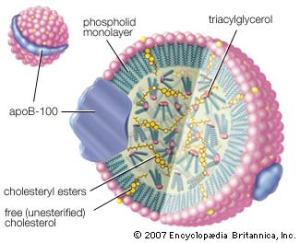
LDL (low density lipoprotein) is a particle that transports cholesterol and triglycerides through our blood to our organs. This particle is comprised of a core and a surrounding membrane.  Here is a picture.
LDL 2

The core contains cholesterol in a storage form (esters) and triglycerides. The outer membrane includes a large protein called apoprotein B-100, “free” cholesterol molecules and phospholipids. The phospholipids contain fatty acids, including PUFA.

LDL has been demonized as “the bad cholesterol” and that demonization has mislead the public.

hdl_ldl good guy bad guy

LDL is the major lipoprotein in our blood but there are others that have different names.

Cholesterol is cholesterol, whether it is carried in LDL or HDL. When carried in the core of a lipoprotein it is carried as a cholesterol ester. 80% of the cholesterol in an LDL particle is carried as an ester in the core. 20% is carried as “free” cholesterol on the outer surface or membrane.

LDLand cholesterol molecule

HDL (high density lipoprotein) is smaller and denser. HDL has been called “the good cholesterol”, another misnomer.

HDL particles, when they are functioning correctly can protect us from atherosclerosis but in patients with diabetes, obesity, and insulin resistance, HDL particles do not function well and in fact probably contribute to disease. (More about that in a future post)

But back to LDL.

Although the risk of cardiovascular disease is correlated with the amount of cholesterol carried by LDL in our blood (referred to as LDL-C), the total amount of cholesterol shuttled by LDL particles is much less relevant than one would be led to believe given the great use of statin drugs to lower LDL-C.

The short version is as follows.

Compared to LDL-C, a much better predictor of cardiovascular disease is the amount of “modified” LDL particles circulating in the blood. Oxidized LDL particles are one form of “modified LDL”. LDL can also  be modified by excess blood sugar levels (especially from HFCS). This modification is referred to as glycosylated or glycated LDL. In this latter form of modification, the major protein on the outer membrane of the LDL particle (apo B 100 in the picture above) becomes attached to a sugar and the result is an LDL particle that is not easily cleared by normal processes. The modified LDL is not “recognized” by the LDL receptors that act as entry points into our cells for proper processing. The result is that the glycated LDL particles circulate longer and are more likely to use up their anti-oxidants (Vitamin E and  Co-enzyme Q 10).

As a result glycated LDL are more likely to become oxidized. That is not good because oxidized LDL sets up a cascade of unhealthy events.

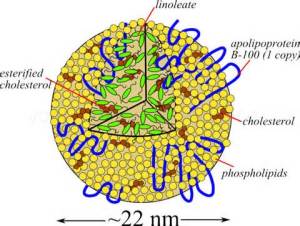
The portion of the LDL particle that becomes oxidized is the fat (fatty acid) from “vegetable oil”, specifically the fatty acid called linoleic acid. This fatty acid has two double bonds making it more likely to be oxidized than for example oleic acid, the major fatty acid in extra virgin olive oil which has only one double bond.

The double bonds between the carbons in the fatty acids are unstable and easily oxidized. The single bonds in saturated fat do not get oxidized.

All other things being equal (and you will see that they are not), the more double bonds in a fatty acid the greater chance for oxidation.

Here is a picture showing the linoleic acid, also called linoleate, on the outer membrane of the LDL particle.
LDL with linoleate

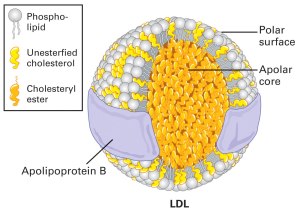
And here is a picture that shows the phospholipids that contain the linoleic acid.
LDL 3

Let’s say it again. The fatty acid found in “vegetable” oil, linoleic acid, is easily oxidized because it has two double bonds.

Saturated fats are not oxidized because they contain no double bonds.

The part of the LDL particle that becomes oxidized is the fatty acid that comes from “vegetable oils”.

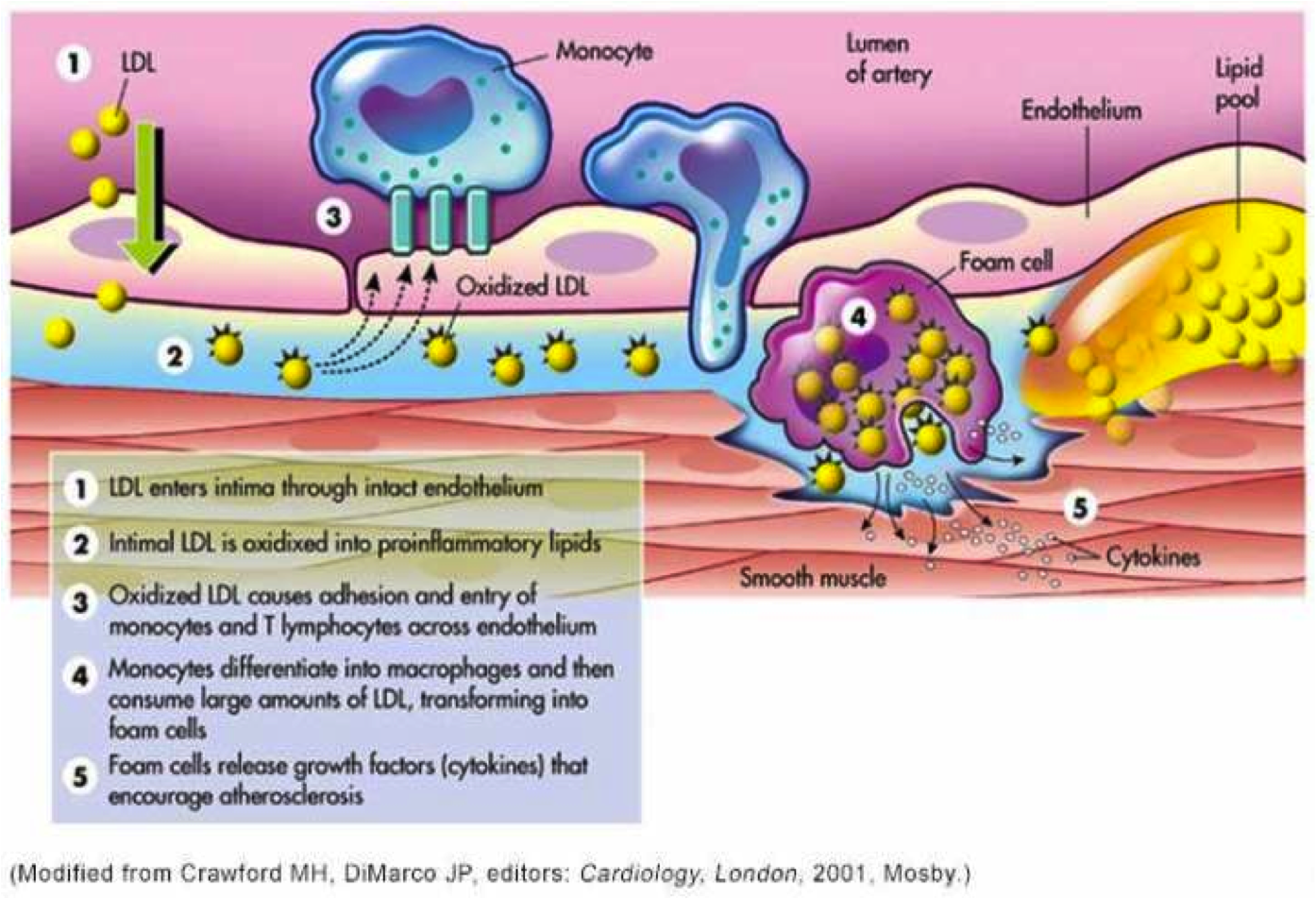
A particular kind of immune cell (white blood cells called monocytes) have  special receptors for oxidized LDL particles. When ox-LDL are “seen” by these monocytes, the monocytes become transformed into macrophages. Macrophages are designed to destroy bacteria that invade our bodies. The oxidized LDL particles resemble the structures of invading bacteria. The macrophages, with very specialized receptors for oxidized LDL, “swallow” the LDL particles and release toxic chemicals to destroy “the invader”.  The macrophages then become “foam cells” in the walls of our arteries, initiating the creation of plaque. Here is a picture.
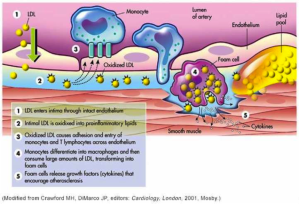
ldl_mechanisms oxidation in vessel wall

This picture depicts the oxidation occurring in the wall of the artery after LDL particles have penetrated the wall. However LDL particles can and do become oxidized while still circulating in the blood and these oxidized particles can stimulate monocytes to transform into macrophages and gobble up the oxidized or modified LDL while these particles are still circulating in the blood.

How and whether unmodified LDL particles cross the wall of arteries into the “sub-endothelial” area remains an unsolved complex issue. The picture above implies that LDL particles simply move across the endothelial cells that line the wall of the artery but that is a presumption.

Clearly, macrophages that have “swallowed” modified LDL particles have mechanisms to work their way between the junctions formed by adjacent endothelial cells.

This is an important distinction because many cardiologists believe that what drives atherosclerosis is a mass effect. The greater the number of LDL particles, the more likely they are to cross the endothelial barrier, get oxidized and retained and start the process of plaque formation. However the process is much more complex and not clearly understood.

We do not yet know or understand completely the factors that influence the permeability of the endothelium to Lipoprotein particles. We do know that modified (oxidized and glycated LDL) disrupt the protective surface of endothelial cells which is called the glyocalyx. Other factors that disrupt the glyocalyx include high blood sugars, dramatic fluctuations in blood pressure (too high or too low), oxidative stress, infections, and circulating endotoxin (which is governed by intestinal permeability).

It is clear from several studies that modified (oxidized) LDL as a single variable predicts cardiovascular disease and heart attacks with much greater accuracy than LDL-C (total cholesterol content of LDL particles). It is also clear that monocyte receptors are specific for modified LDL and that the  process that initiates the cascade of events that leads to plaque formation involves the interaction between modified lipoprotein particles and the immune system (monocytes).

Now here is another twist.

Omega 3 fatty acids in fish oil are considered “heart healthy”. They help prevent heart attacks and strokes. They also decrease inflammation throughout the body thereby producing many health benefits.

BUT OMEGA 3 FAT HAS MORE DOUBLE BONDS THAN OMEGA 6 FAT (LINOLEIC ACID) YET THEY HELP PROTECT THE HEART. HOW CAN THAT BE?

How do they avoid contributing to atherosclerosis? Are they not even more readily oxidized than linoleic acid?

The simple answer is no.

The major reason is that the omega three fatty acids are protected by “plasmalogens” which are important components of our LDL particle outer membranes. Plasmalogens are found in the membranes of lipoprotein particles and in the membranes of human cells. Because of their chemical structures, omega three fats are easily incorporated into plasmalogens which protect the double bonds of omega three fats from oxidation. Linoleic acid, the predominant component of “vegetable oils” is not easily incorporated into the protective arms of plasmalogens.

This selective protection is well described on pages 141-142 of  “The Fats of Life”, written by Dr. Glen Lawrence and published in paperback in 2013. (link below)

I asked Dr. Lawrence about this issue in an email and here was his response.

“The omega-3 fatty acids are preferentially incorporated into plasmalogens, which act as antioxidants due to the double bond adjacent to the ether linkage of these phospholipids. This structure would tend to scavenge free radicals or reactive oxygen species near the surface of the membrane, rather than allowing them to penetrate deeper in the membrane where the double bonds of PUFA are located. This makes any polyunsaturated fatty acids attached to the plasmalogens more resistant to oxidation than they would be in a regular phospholipid. See pp 141-142 of The Fats of Life. The shorter chain and less unsaturated linoleic acid does not tend to be incorporated into plasmalogens.”

In summary:

  1. “Vegetable oil” is actually not oil from vegetables but rather a highly processed and refined oil. This oil contains primarily the easily oxidized omega 6 PUFA (polyunsaturated fatty acid) linoleic acid. Oxidation can occur during manufacture,  before consumption while sitting in the bottle, but especially during high heat cooking (fried foods). Oxidation can also in your body as this fat circulates in your blood on the membrane of lipoprotein particles.
  2.  LDL particles are the major lipoprotein particles that shuttle cholesterol and fatty acids (in in the form of triglycerides) through our bodies in our bloodstream.
  3. Modified LDL particles (glycated and/or oxidized LDL) stimulate monocytes (immune cells) to transform into macrophages and gobble up the modified LDL. In addition, glycated LDL particles are more easily oxidized because they circulate longer in our blood.
  4. Macrophages become filled with modified LDL. These are called foam cells. Foam cells  initiate a cascade of events that lead to the formation of plaque in the walls of our arteries.
  5. The part of the LDL particle membrane that becomes oxidized is the phospholipid that contains linoleic acid which comes from “vegetable oils”
  6. High amounts of sugar, especially HFCS, and highly refined flour foods in our diets cause larger blood sugar fluctuations than whole foods and therefore contribute to the glycation of LDL particles. This glycation leads to more oxidation of LDL. In this manner HFCS and refined flour foods contribute to the process of atherosclerosis.
  7. High amounts of sugar, HFCS and refined flour foods also contribute to obesity, insulin resistance and diabetes which then increase the risk of heart attack and stroke.
  8. Several factors contribute to the disruption of the glycocalyx which is the protective surface of the endothelial cells that line our arteries. These include but are not limited to modified LDL, inflammation, high blood sugars, abnormal fluctuations in blood pressure, circulating endotoxin (associated with increased intestinal permeability), infections. Disruption of the glycocalyx contributes to the formation of plaque (atherosclerosis).
  9. Modified LDL particles might also migrate through the junctions that connect adjacent endothelial cells either inside macrophages or on their own. Many factors, known and unknown likely determine the susceptibility or permeability of these junctions to this migration.

These are the major points, but there is allot more to discuss. Substituting “vegetable oils” for saturated fat in our diets not only increases the amount of oxidized LDL but also increases a dangerous lipoprotein called Lp(a). On third of Americans have an amount of Lp(a) that is considered “high risk” for heart attack and stroke. More about that in a future post.

Then there is the process of an actual heart attack or stroke which involves disruption of plaque and the creation of a blood clot that ultimately disrupts the flow of blood and the death of heart or brain tissue. The susceptibility of plaque to disruption is a huge topic that involves high blood pressure, diabetes, insulin resistance, oxidative stress, inadequate sleep, and stress to name a few. So much more to discuss.

But getting back to the title of this post, why don’t you ask your elected representatives why our tax dollars continue to subsidize nutritional root causes of death, disability and disease?

Here are some links to papers and books that support the discussion above.

Circulating Oxidized LDL Is a Useful Marker for Identifying Patients With Coronary Artery Disease

Cholesterol deposition in macrophages: foam cell formation mediated by cholesterol-enriched oxidized low density lipoprotein.

Erythrocyte fatty acid profiles can predict acute non-fatal myocard… – PubMed – NCBI

Changes in Dietary Fat Intake Alter Plasma Levels of Oxidized Low-Density Lipoprotein and Lipoprotein(a)

Low-density lipoprotein subclass patterns and risk of myocardial in… – PubMed – NCBI

Subendothelial Lipoprotein Retention as the Initiating Process in Atherosclerosis

Oxidative susceptibility of low density lipoprotein subfractions is… – PubMed – NCBI

Effects of linoleate-enriched and oleate-enriched diets in combinat… – PubMed – NCBI

Enhanced oxidative susceptibility and reduced antioxidant content o… – PubMed – NCBI

Susceptibility of small, dense, low-density lipoproteins to oxidati… – PubMed – NCBI

Modulation of Endothelial Glycocalyx Structure under Inflammatory Conditions

Oxidized Lipoproteins Degrade the Endothelial Surface Layer

S1P Control of Endothelial Integrity

Mechanical control of the endothelial barrier. – PubMed – NCBI

Therole of actin-binding proteins in the control of endothelial bar… – PubMed – NCBI

The Fats of Life, Dr. Glen Lawrence

Functions of plasmalogen lipids in health and disease

Grain Brain: The Surprising Truth about Wheat, Carbs, and Sugar–Your Brain’s Silent Killers: David Perlmutter, Kristin Loberg: 9780316234801: Amazon.com: Books

Finally a quote from the Dali Lama (thanks to my cousin Diane for bringing this to my attention).

“Man. Because he sacrifices his health in order to make money. Then he sacrifices money to recuperate his health. And then he is so anxious about the future that he does not enjoy the present, the result being that he does not live in the present or the future, he lives as if he is never going to die, and dies having never really lived.”

Eat clean, live clean, sleep well, exercise wisely, rest often, enjoy the company of loved ones, spend time outdoors and live in the present.

BOB

Low Carb Beats Low Fat Again, Annals of Internal Medicine article

Once again, a randomized trial demonstrates that a carbohydrate restricted approach is superior to a low fat diet with regards to weight loss, inflammation, body composition and cardiovascular risk factors. This study was recently published in the Annals of Internal Medicine, the official journal for the American College of Physicians.

Men and women aged 22 to 75 years with a body mass index of 30 to 45 kg/m2 (obesity defined as BMI > 30, morbid obesity defined as BMI >35) were recruited from the general public by using mailing lists, fliers, work site and community screenings, and television advertisements.

Neither diet included a specific calorie or energy goal. Participants in each group were asked to refrain from changing their physical activity levels during the intervention

Here is the summary cut and pasted from the abstract.

Objective: To examine the effects of a low-carbohydrate diet compared with a low-fat diet on body weight and cardiovascular risk factors.

Design: A randomized, parallel-group trial. (ClinicalTrials.gov: NCT00609271)

Setting: A large academic medical center.

Participants: 148 men and women without clinical cardiovascular disease and diabetes.

Intervention: A low-carbohydrate (<40 g/d) or low-fat (<30% of daily energy intake from total fat [<7% saturated fat]) diet. Both groups received dietary counseling at regular intervals throughout the trial.

Measurements: Data on weight, cardiovascular risk factors, and dietary composition were collected at 0, 3, 6, and 12 months.

Results: Sixty participants (82%) in the low-fat group and 59 (79%) in the low-carbohydrate group completed the intervention. At 12 months, participants on the low-carbohydrate diet had greater decreases in weight (mean difference in change, −3.5 kg [95% CI, −5.6 to −1.4 kg]; P = 0.002), fat mass (mean difference in change, −1.5% [CI, −2.6% to −0.4%]; P = 0.011), ratio of total–high-density lipoprotein (HDL) cholesterol (mean difference in change, −0.44 [CI, −0.71 to −0.16]; P = 0.002), and triglyceride level (mean difference in change, −0.16 mmol/L [−14.1 mg/dL] [CI, −0.31 to −0.01 mmol/L {−27.4 to −0.8 mg/dL}]; P = 0.038) and greater increases in HDL cholesterol level (mean difference in change, 0.18 mmol/L [7.0 mg/dL] [CI, 0.08 to 0.28 mmol/L {3.0 to 11.0 mg/dL}]; P < 0.001) than those on the low-fat diet.

Limitation: Lack of clinical cardiovascular disease end points.

Conclusion: The low-carbohydrate diet was more effective for weight loss and cardiovascular risk factor reduction than the low-fat diet.

Primary Funding Source: National Institutes of Health.

Let’s go through those results again: At 12 months, participants on the low-carbohydrate diet had

  1.  greater decreases in weight. This has been demonstrated in multiple previously published studies.
  2.  greater decreases in  fat mass. This is an important distinction, the low carb group lost more fat, not muscle.
  3.  greater decreases in the ratio of total to high-density lipoprotein (HDL) cholesterol. This ratio is a measure of cardiovascular risk (risk for heart attack and stroke). It improved more on low carb than on low fat diets.
  4.  greater decreases in triglyceride level. Triglyceride level is also an important cardiovascular risk factor. It went down significantly more as compared to the low fat diet.
  5.  greater increases in HDL cholesterol level. This result is considered to be protective against heart attack and stroke.
  6. greater decreases in CRP level than those in the low-fat group. CRP (C-reactive protein) is a blood test for inflammation and is also a cardiovascular risk factor.
  7. significant decreases in estimated 10-year risk for coronary heart disease as measured by the Framingham risk analysis at 6 and 12 months, whereas those in the low-fat group did not. Say again, the low fat group did not decrease their Framingham risk analysis but the low carb group did.

All of these differences were “statistically significant”, meaning they were unlikely caused by accident.
And what about side-effects?

The number of participants who had symptoms, including constipation, fatigue, thirst, polyuria, diarrhea, heartburn, gas, nausea, vomiting, appetite changes, or headache, did not differ significantly between the low-carbohydrate and low-fat groups, except significantly more participants on the low-fat diet reported headaches at 3 months

The authors concluded:

Our study found that a low-carbohydrate diet induced greater weight loss and reductions in cardiovascular risk factors at 12 months than a low-fat diet among black and white obese adults who did not have diabetes, CVD, or kidney disease at baseline. Compared with a low-fat diet, a low-carbohydrate diet resulted in greater improvements in body composition, HDL cholesterol level, ratio of total–HDL cholesterol, triglyceride level, CRP level, and estimated 10-year CHD risk. Because CVD is the most common cause of death in the United States and obesity is a particularly prevalent risk factor, our study has important clinical and public health implications

Effects of Low-Carbohydrate and Low-Fat Diets: A Randomized Trial, A. Bazzano, MD, PhD, MPH et. al., Ann Intern Med. 2014;161(5):309-318. doi:10.7326/M14-0180

Get rid of the sugar-added foods, processed and refined flour foods and vegetable oils. Send a message to corporate America that crap-in-a bag and crap-in-a-box is no longer in demand. Eat only grass-fed meat, wild seafood, fresh vegetables, fresh fruit and tree nuts. Enjoy better health and better food.


Bob Hansen MD.

Carbohydrate Restriction for Diabetes I and II

A great review article challenging the current low fat dogma has been published. This should be required reading for all physicians. It brings clarity, data, and perspective to the discussion.

Here is the abstract:

Abstract

“The inability of current recommendations to control the epidemic of diabetes, the specific failure of the prevailing low-fat diets to improve obesity, cardiovascular risk or general health and the persistent reports of some serious side effects of commonly prescribed diabetic medications, in combination with the continued success of low-carbohydrate diets in the treatment of diabetes and metabolic syndrome without significant side effects, point to the need for a reappraisal of dietary guidelines.”

Here are the opening paragraphs.

“The benefits of carbohydrate restriction in diabetes are immediate and well-documented. Concerns about the efficacy and safety are long-term and conjectural rather than data-driven. Dietary carbohydrate restriction reliably reduces high blood glucose, does not require weight loss (although is still best for weight loss) and leads to the reduction or elimination of medication and has never shown side effects comparable to those seen in many drugs.

Here we present 12 points of evidence supporting the use of low-carbohydrate diets as the first approach to treating type 2 diabetes and as the most effective adjunct to pharmacology in type 1. They represent the best-documented, least controversial results. The insistence on long-term random-controlled trials as the only kind of data that will be accepted is without precedent in science. The seriousness of diabetes requires that we evaluate all of the evidence that is available. The 12 points are sufficiently compelling that we feel that the burden of proof rests with those who are opposed.

“At the end of our clinic day, we go home thinking, ‘The clinical improvements are so large and obvious, why don’t other doctors understand?’ Carbohydrate restriction is easily grasped by patients: because carbohydrates in the diet raise the blood glucose, and as diabetes is defined by high blood glucose, it makes sense to lower the carbohydrate in the diet. By reducing the carbohydrate in the diet, we have been able to taper patients off as much as 150 units of insulin per day in eight days, with marked improvement in glycemic control – even normalization of glycemic parameters.”

— Eric Westman, MD, MHS [1].

Here is the link to the whole article.

Dietary Carbohydrate restriction as the first approach in diabetes management. Critical review and evidence base

Peace and good health.

Bob Hansen MD

Amputations, Gangrene and Carbohydrates

As an anesthesiologist I have spent more than 60,000 hours in the operating room and cared for over 30,000 patients. I often observe the end-results of bad dietary advice. I am referring to the liberal carbohydrate allowance that the American Diabetes Association and other agencies offer diabetics.

Today was a particularly poignant day as I cared for two diabetics who required amputations for complications of diabetes type II. These complications could have likely been avoided if our supermarkets were not stocked with high carb nutritionally deplete “food” AND if the ADA, physicians and nutritionists counseled diabetics to significantly reduce their carbohydrate intake. Instead, the low fat narrative has so predominated our culture, that we have taken our eyes off of the major dietary threats during the past 40 years, excessive carbohydrates and especially refined carbohydrates.

The leading cause of amputations in modern society are the complications of diabetes including peripheral arterial disease (atherosclerosis in the arteries to our limbs) and peripheral neuropathy (loss of sensation in the feet and hands). The combination of these two, or just one alone can lead to non-healing wounds and ulcers in the feet, then chronic infections and ultimately gangrene. Futile efforts to restore circulation to the legs with vascular bypass surgeries or arterial stents usually just briefly delay the inevitable series of amputations that start in the toes and progress up the leg, step by step until only a stump is left above the level once occupied by the knee.

Gangrene is an ugly thing. During the Civil War the major cause was trauma. Today the major cause is diabetes and indirectly, excess carbohydrate consumption.

The visual experience of gangrene results in a visceral reaction, even after more than 30 years of observation. The knowledge that most of these complications could be avoided by simply eating whole fresh foods instead of crap in a bag or crap in a box is frustrating. The human suffering and economic costs (lost wages, disability, medical expenses) are staggering. Diabetes type II is largely a disease of lifestyle. The lifestyle elements involved include poor dietary habits, lack of exercise, inadequate sleep, and stress. All of these contribute and all are modifiable and avoidable.

Type II diabetes is arguably reversible early in the disease process. As it progresses a patient reaches an irreversible point of no return where the pancreas has been exhausted and the insulin producing cells are no longer efficient and effective. Equally important,  the cells in the rest of the body do not respond in a normal fashion to what little insulin is produced. But even at this stage carbohydrate restriction can mitigate complications if only healthy fresh whole-foods are consumed and modest exercise is practiced on a daily basis.

Other complications of diabetes including blindness, painful neuropathy, kidney failure requiring dialysis, heart attack and stroke all are arguably avoidable with a whole foods paleolithic carbohydrate restricted diet and modest amounts of regular exercise.

What a pity, what a shame, what a waste.

Below are some links and research articles to back up my statements.

Peace, health, and harmony.

BOB

1. Type 2 Diabetes

2. American Diabetes Association Embraces Low-Carbohydrate Diets. Can You Believe It? | Richard David Feinman

3. Nutrition Science on Pinterest

4. Low-Carb for You: Low-Carb versus Low-Fat

And Many More:

Jenkins DJ, Kendall CW, McKeown-Eyssen G, Josse RG, Silverberg J, Booth GL, Vidgen E, Josse AR, Nguyen TH, Corrigan S et al: Effect of a low-glycemic index or a high-cereal fiber diet on type 2 diabetes: a randomized trial. JAMA 2008, 300(23):2742-2753.

Westman EC, Yancy WS, Mavropoulos JC, Marquart M, McDuffie JR: The Effect of a Low-Carbohydrate, Ketogenic Diet Versus a Low-Glycemic Index Diet on Glycemic Control in Type 2 Diabetes Mellitus. Nutr Metab (Lond) 2008, 5(36).

Gannon MC, Hoover H, Nuttall FQ: Further decrease in glycated hemoglobin following ingestion of a LoBAG30 diet for 10 weeks compared to 5 weeks in people with untreated type 2 diabetes. Nutr Metab (Lond) 2010, 7:64.

Gannon MC, Nuttall FQ: Control of blood glucose in type 2 diabetes without weight loss by modification of diet composition. Nutr Metab (Lond) 2006, 3:16.

Gannon MC, Nuttall FQ: Effect of a high-protein, low-carbohydrate diet on blood glucose control in people with type 2 diabetes. Diabetes 2004, 53(9):2375-2382.

Forsythe CE, Phinney SD, Feinman RD, Volk BM, Freidenreich D, Quann E, Ballard K, Puglisi MJ, Maresh CM, Kraemer WJ et al: Limited effect of dietary saturated fat on plasma saturated fat in the context of a low carbohydrate diet. Lipids 2010, 45(10):947-962.

Jakobsen MU, Overvad K, Dyerberg J, Schroll M, Heitmann BL: Dietary fat and risk of coronary heart disease: possible effect modification by gender and age. Am J Epidemiol 2004, 160(2):141-149.

Siri-Tarino PW, Sun Q, Hu FB, Krauss RM: Saturated fat, carbohydrate, and cardiovascular disease. Am J Clin Nutr 2010, 91(3):502-509.

Int J Cardiol. 2006 Jun 16;110(2):212-6. Epub 2005 Nov 16. Effect of a low-carbohydrate, ketogenic diet program compared to a low-fat diet on fasting lipoprotein subclasses. Westman EC, Yancy WS Jr, Olsen MK, Dudley T, Guyton JR.

Mol Cell Biochem. 2007 Aug;302(1-2):249-56. Epub 2007 Apr 20.Beneficial effects of ketogenic diet in obese diabetic subjects. Dashti HM, Mathew TC, Khadada M, Al-Mousawi M, Talib H, Asfar SK, Behbahani AI, Al-Zaid NS.


Not all calories are the same.

The old school teaching about obesity went like this. Consume more calories than you burn and you gain weight. Consume less calories than you burn and you lose weight. Obesity is just a problem of self control. All calories are the same.

This way of thinking has been dis proven but still pervades many discussions.

Ample evidence supports the following facts that should be considered in choosing foods and mitigating the obesity epidemic.

  • High glycemic high carbohydrate foods and beverages such as bread, pasta, potatoes, crackers, chips, granola bars, breakfast cereal, soda, energy drinks produce a rapid rise in blood sugar and insulin levels, stimulate hunger, enhance further carbohydrate cravings, and drive people to overeat. Thus, what kind of food you eat affects how much you eat. (1,2)
  • High carbohydrate diets  result in decreased calorie burning (decreased metabolic rate) compared to high fat high protein diets. Thus, a diet with carbohydrate restriction not only limits hunger (improves satiety) but also results in burning more calories for the same level of activity and at rest. I have previously discussed weight loss studies that consistently demonstrate that carbohydrate restriction results in spontaneous reduction in caloric consumption. At the same time this approach results in burning more calories while you watch TV or go for a walk. (3)
  • The human body does not absorb all of the calories present in food. A higher % of the calories present in highly processed refined foods (which represent 70% of the American diet) are absorbed compared to whole unprocessed foods such as tree nuts. (4)
  • Whole foods, especially non-starchy vegetables, provide much more satiety producing fiber (non-starchy vegetables have five to seven times as much fiber compared to whole grain bread on a per calorie basis)
  • Food choices produce different effects on the gut flora. A diet consisting of whole hunter-gatherer type foods (grass fed meat, free range poultry and eggs, wild seafood, fresh fruits, vegetables and nuts) enhance and support the development of “good bacteria” in the gut. As discussed before , the gut flora have a major impact on the risk of obesity and other diseases.
  • High carbohydrate diets produce higher insulin levels.  Insulin results in conversion of carbohydrate into fat and storage of fat. Insulin inhibits the burning of fat. Carbohydrate restriction results in burning fat for energy.
  • The process of protein digestion consumes more calories compared to the digestion of carbohydrate. Protein has a higher  thermogenic effect compared to carbohydrate.

THE BOTTOM LINE: not all calories are the same. The quality of the food we consume affects our metabolic rate, our absorption of calories, how quickly we feel full and therefore how many calories we consume, and the mix of good bacteria and bad bacteria that live in our GI tract.

Good health, peace and tranquility to all

BOB

1. Fed Up Asks, Are All Calories Equal? – NYTimes.com

2. Changes in diet and lifestyle and long-term wei… [N Engl J Med. 2011] – PubMed – NCBI

3. Effects of Dietary Composition During Weight Loss Maintenance: A Controlled Feeding Study

4. Impact of Peanuts and Tree Nuts on Body Weight and Healthy Weight Loss in Adults

The Ornish Low Fat Vegetarian Diet, does it work?

Dr. Dean Ornish has done wonderful research in the area of cardiovascular disease and lifestyle intervention. His study on comprehensive lifestyle intervention (1) is often quoted to support a low fat vegetarian diet as treatment for cardiovascular disease. But his “Intensive lifestyle changes for reversal of coronary heart disease” included several components that would be expected to improve health and decrease cardiovascular risk independent of a vegetarian diet as will be discussed below.

Let’s review what this study did.

48 patients with diagnosed moderate to severe coronary artery disease were randomized to one of two treatment groups, an “intensive lifestyle change” (ILC) group or a “usual-care” (UC) control group. 28 patients were allocated randomly to the ILC group and 20 were allocated to the UC group. Out of 48 patients starting the study only 35 completed the study,   20 out of 28 in the ILC group completed the study and 15 out of 20 in the UC group completed the study.

The intensive lifestyle change group followed this program:

  • 10% fat whole foods vegetarian diet
  • daily aerobic exercise
  • stress management training (training in and daily performance of meditation and/or yoga)
  • smoke cessation (they quit smoking)
  • group psychosocial support (3 hour group therapy sessions)

At the start of the study only one patient in the ILC group was smoking and she quit. We do not know how many smokers were in the UC group or how many quit. (I consider that a deficiency of this study. Because smoking is such a significant determinant of cardiovascular outcome, details of smoking at start and end of the study for both groups should have been reported)

At the end of five years the intensive lifestyle change group demonstrated an average 3.1% absolute reduction in the coronary artery blockage as measured by coronary arteriograms (or to put it another way, the diameter of the blocked coronary arteries increased by 3.1%). The usual care group (receiving cholesterol lowering statin drugs) showed an average 2.3% absolute increase in the coronary artery blockage (2.3% reduction in diameter). These are not huge changes or differences but they were measurable and statistically significant.

Twenty five total  “cardiac events” occurred in the 28 patients randomized to the intensive lifestyle change group over the five years and 45 cardiac events occurred in the 20 patients randomized to the “usual care” group (receiving cholesterol lowering statin drugs). But this was due to differences in the number of hospitalizations and angioplasties. There was no statistically significant difference in the number of deaths, heart attacks or coronary artery bypass surgeries.

By the end of the study 2 patients in the ILC group had died compared to 1 death in the usual care group but as mentioned above, this difference was not statistically significant.  We do not know how many deaths occurred in the 8 patients who dropped out of the treatment group or in the 5 patients who dropped out of the usual care group, nor do we know any of the other outcomes for the drop-out patients.

So there were no lives saved by the intensive lifestyle change program and no reduction in the number of heart attacks. In fact the ILC group had 2 deaths compared to 1 in the usual care group.

What does this all mean and why has the Ornish Diet attracted so much attention.?

First, I would suggest that the demonstrated benefits (reductions in the number of angioplasties and hospitalizations) are likely explained by the following parts of the lifestyle changes.

  1. stress reduction training and implementation (meditation and yoga)
  2. elimination of manufactured trans-fats from the diet
  3. elimination of unhealthy pro-inflammatory excess omega six fats (vegetable oils) from the diet
  4. elimination/reduction of processed carbohydrates and sugar.

Although the intensive lifestyle intervention included regular exercise the data show no significant difference in times per week or hours per week of exercise at the end of the study between the two groups.

The big difference was in stress management. The ILC group averaged practicing meditation and/or yoga 5 times per week (48 minutes per day) versus less that once per week (8 minutes per day) in the usual care group.

Stress reduction is a major issue in any disease and in particular in cardiovascular disease.

Several studies have demonstrated that the daily practice of meditation  improves immune function, increases telomerase activity, reduces inflammatory markers, and reduces circulating stress hormones (cortisol and epinephrine) independent of dietary changes.
Meditation has also been observed to improve “endothelial function”, the ability of the cells that line arteries to respond to changes in demand. (2,3,4,5,6,7)

Here is a press release from the American Heart Association 13 November 2012. (8)

“African Americans with heart disease who practiced Transcendental Meditation regularly were 48 percent less likely to have a heart attack, stroke or die from all causes compared with African Americans who attended a health education class over more than five years, according to new research published in the American Heart Association journal Circulation: Cardiovascular Quality and Outcomes.

Those practicing meditation also lowered their blood pressure and reported less stress and anger. And the more regularly patients meditated, the greater their survival, said researchers who conducted the study at the Medical College of Wisconsin in Milwaukee.”

I believe the major benefit of the interventional program was from the stress reduction and the elimination of three major dietary sources of trouble (trans-fats, excess omega 6 fats from processed-refined vegetable oils, and refined carbohydrates-sugar)

I have already discussed in other posts the problems associated with excess omega 6 fats and refined carbohydrates-sugar relative to cardiovascular risk. (9,10,11)

There is little controversy that elimination/reduction in trans-fats produces benefit. (12,13,14)

All three of these changes were essential to the whole foods approach of the intervention group.

I have also discussed the lack of data to support the contention that saturated fat from animal sources of protein contributes to cardiovascular disease. (15, 16))

I remain a strong proponent of a whole foods diet that includes a variety and abundance of organic vegetables and fruits, nuts, pastured grass-fed meat, fresh wild seafood, free-range organic poultry and eggs from that kind of poultry.  This diet represents the foods we have evolved to eat, free from added sugar, hormones, antibiotics, pesticides. This dietary approach also produces a healthy balance of omega 6 to omega 3 fatty acid as well as a significant improvement in the ratio of potassium to sodium.

Stress reduction should be an essential part of our lives and data on this aspect of health will be discussed in future posts. References for this discussion appear below.

Peace,

BOB Hansen MD

REFERENCES:

1. JAMA Network | JAMA | Intensive Lifestyle Changes for Reversal of Coronary Heart Disease

2. Intensive meditation training, immune cell telomerase activity, and psychological mediators.

3. Can meditation slow rate of cellular aging? Cognitive stress, mindfulness, and telomeres.

4. A pilot study of yogic meditation for family dementia caregivers with depressive symptoms: effects on mental health, cognition, and telomerase activity.

5. Meditation Improves Endothelial Function in Metabolic Syndrome, American Psychosomatic Society (APS) 69th Annual Scientific Meeting: Abstract 1639. Presented March 10, 2011.

6. Alterations in brain and immune function produced by mindfulness meditation.

7. Adrenocortical activity during meditation.

8. Meditation may reduce death, heart attack and stroke in heart patients | American Heart Association

9. Polyunsaturated fat, Saturated fat and the AHA

10, Lose weight, control blood sugar, reduce inflammation

11. Sugar, a serious addiction

12. The negative effects of hydrogenated trans fats and what to do about them.

13. Trans fats in America: a review of their use… [J Am Diet Assoc. 2010] – PubMed – NCBI

14. FDA to Ban Trans Fats in Foods – US News and World Report

15. saturated fat | Practical Evolutionary Health

16. Meta-analysis of prospective cohort studies evaluating the association of saturated fat with cardiovascular disease.

Addendum to lose weight, control blood sugar, decrease inflammation

To those of you who have subscribed to my blog by e-mail, I must apologize that I hit the “publish button” by mistake before I completed the finished article. So if you would like to read the full article, please go to the website for the updated and completed version.

Thanks

Bob Hansen MD

Lose weight, control blood sugar, reduce inflammation

The Duke University Lifestyle Medicine Clinic prescribes a nutritional program based upon a very simple concept, limit carbohydrate intake and multiple problems improve. This approach is so powerful in controlling blood sugar that diabetic patients must reduce their medication  before adopting the nutritional program in order to avoid very low blood sugars.

Compared to a low-fat diet weight loss approach, it is better or equal on every measurement studied. Here is what happens on the carbohydrate restricted program when compared to a low fat diet (American Heart Association diet). The carbohydrate restricted diet results in

  • Greater reduction in weight and body fat
  • Greater reduction in fasting blood sugar
  • Reduction in the amount of saturated fat circulating in the blood despite a higher intake than a low fat diet
  • Greater reduction in insulin with improved insulin sensitivity
  • Reduction in small LDL (low fat diets increase small LDL which is considered to be associated with more heart attacks and strokes)
  • Increase in HDL (low fat diets decrease HDL, decreased HDL is associated with increased risk of heart attack and stroke)
  • Greater reduction in Triglycerides
  • Reduction in the ApoB/ApoA-1 ratio (low fat diets do the opposite, and the opposite is considered to increase risk of heart attack and stroke).
  • Reduction in multiple markers of inflammation
  • Spontaneous reduction in caloric consumption without counting or restricting calories (people automatically eat less as a result of restricting carbohydrates, low-fat diets require counting and restricting calories in order to lose weight)
  • Increased consumption of non-starchy vegetables

All of these beneficial effects are accepted by the medical community as reducing cardiovascular risk .

The improved metabolic outcome can occur even without weight loss simply by substituting fat for carbohydrate.

“The key principle is that carbohydrate, directly or indirectly through the effect of insulin, controls the disposition of excess dietary nutrients. Dietary carbohydrate modulates lipolysis, lipoprotein assembly and processing and affects the relation between dietary intake of saturated fat intake and circulating levels.” see here

Yet despite these proven effects, the proponents of low-fat diets refer to the carbohydrate restriction approach as a “fad diet”. In his excellent discussion of this term, Richard Feinman points out that historically, a carbohydrate restriction approach is actually the longest standing and proven approach to the treatment of obesity compared to a low-fat diet which is a relative newcomer. He describes how a low-fat diet more closely meets the dictionary’s definition of a “fad”.

Multiple Studies have compared carbohydrate restriction to low fat diet approaches and the results are consistent. In addition to the advantages cited above, carbohydrate restricted approaches when compared to low-fat diets reveal that symptoms of  “negative affect and hunger improved to a greater degree” compared with those following a low fat diet”. (see here)

When one analyzes the carbohydrate restricted diet (CRD) approach employed by many centers, including the Duke Interventional Medicine Clinic, one finds great similarity to a paleolithic diet.

They both eliminate or dramatically reduce

  • sugar-sweetened foods and beverages,
  • grains, flour foods and cereal foods
  • legumes (paleo completely, CRD to a large extent)
  • processed-refined vegetable oils
  • dairy (paleo completely, CRD to a large extent)

Fruits under a CRD are limited to small amounts of berries initially and this is liberalized over time as weight loss is achieved and metabolic parameters are improved. This is consistent with a paleolithic approach that recognizes that fruits and vegetables grown today have been bred to provide much higher sugar and starch content compared to the pre-agricultural  fruits and vegetables that early hominids consumed for hundreds of thousands of years.

A carbohydrate restricted nutritional approach to treat obesity, diabetes, or metabolic syndrome appears to be a valid and arguably superior remedy to a growing problem in the developed world. Yet despite this strong and convincing scientific data, dietary fat-phobia has impaired the utilization of this proven therapeutic modality.

Peace,

Bob Hansen M.D.